|
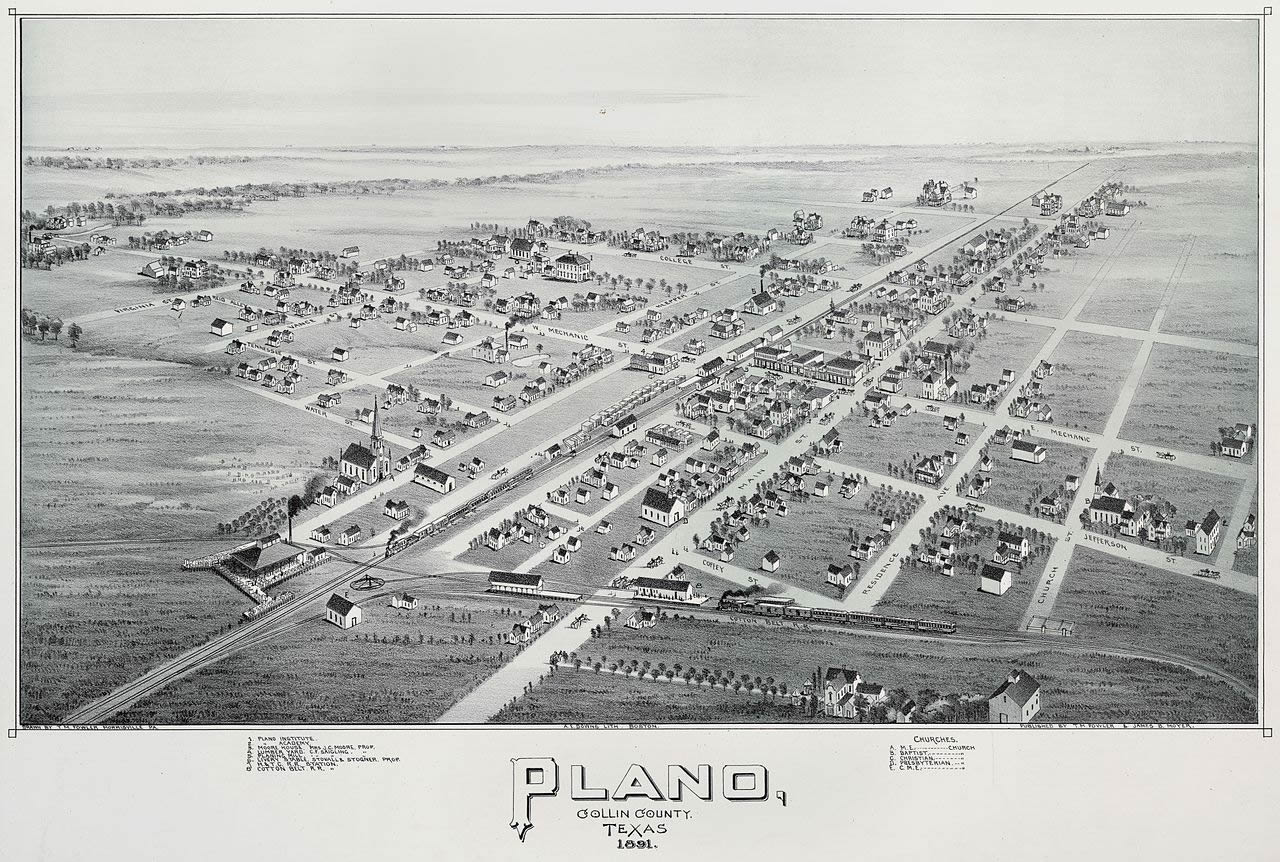
Plano 1891 bird's
eye view
Click
on image to enlarge
Toned lithograph by A.E. Downs, Boston. Published by T. M. Fowler
& James B. Moyer. Amon Carter Museum, Fort Worth, Texas |
History
in a Pecan Shell
Settlement began as early as 1845 when members of the Peters Colony
moved into the vacant prairie. Settlers had been killed by Indians
the year before, bit things calmed down thereafter.
Plano developed around the store and businesses of Wm. Foreman in
1851 who operated the town’s first post office out of his home. When
the town applied for a proper post office, Foreman, Texas was one
of the names considered.
Dr. Henry Dye is credited with suggesting the Spanish word Plano which
was approved. Dye thought it meant “plain” when it actually translates
as “flat.” It’s a moot point since both words applied to the local
topography.
Incorporated and platted in 1873, the town had to wait until 1891
for a school system. Plano was connected to Dallas
in 1872 when the Houston and Texas Central Railroad arrived. This
progressive milestone was crushed to gravel in 1881 when a huge fire
reduced the town to ashes. Most of Plano’s population was reduced
to living in tents.
A second railroad arrived in 1888, helping the town get back on its
feet.
Plano’s population was better-than-average in 1890 when it was a highly
respectable 1,200. The two railroads were supplemented by the more
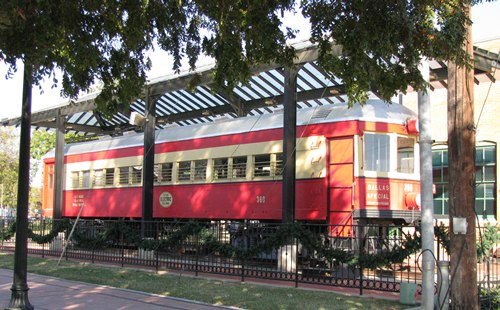
passenger-friendly Texas
Electric Railroad in 1908.
As late as 1960 Plano was still a farming community of 4,000 people,
but that was soon to change drastically. In 1970 with an influx of
job-seekers and the forcing out of farmers by oppressive land reappraisals,
Plano jumped to a population of nearly 18,000. Ten years later it
had reached 72,000 people – most of them from Northern states.
The population was reported as 128,713 for the 1990 census and Plano
became the economic center for Collin County. In 2000 the population
was reported as 222,030. |
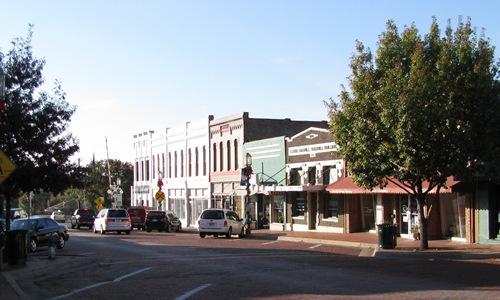 |
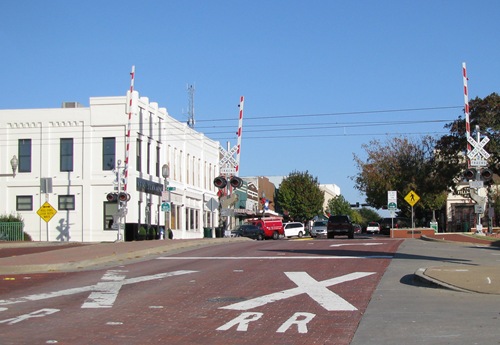
Entering Historic
Plano
Photo courtesy Mike
Price, November 2007 |
Plano Texas
Historic District
Photographer's
Note:
Old downtown Plano is quite well preserved. It is mostly in a one
block area. This part of Plano had at least two major fires over the
years which destroyed many of the buildings. The new construction
has been made to fit in with the old structures and makes it appear
to all be old. [Here are] some of the old surviving buildings. I assume
they are original. [There are] many modern water towers across town.
The old metal tower was removed many years ago and relocated to the
town of Murphy just to the east of Plano. - Mike
Price, November 29, 2007 |
Historic downtown
Photo courtesy Mike
Price, November 2007 |
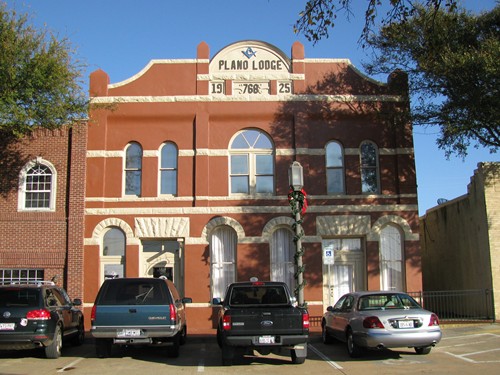
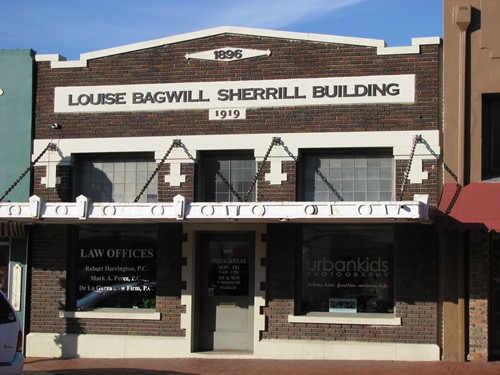
1896 Louise Bagwill
Sherrill Building in Plano
Photo courtesy Mike
Price, November 2007 |
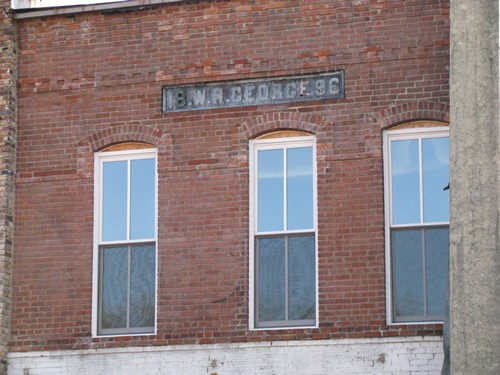
1896 W. R. George
Buildingin Plano
Photo courtesy Mike
Price, November 2007 |
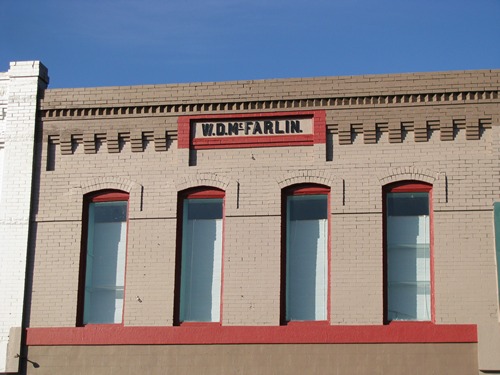
W.D.
McFarlin Building
Photos courtesy Mike
Price, November 2007 |
| Texas
Escapes, in its purpose to preserve historic, endangered and vanishing
Texas, asks that anyone wishing to share their local history, stories,
landmarks and recent or vintage photos, please contact
us. |
|
|
 HOME
HOME