|
|
This
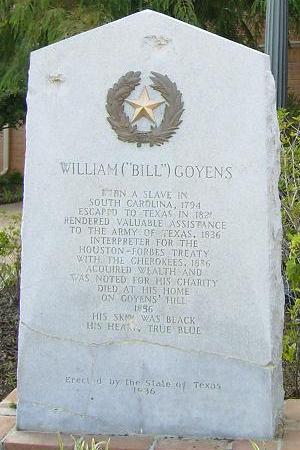
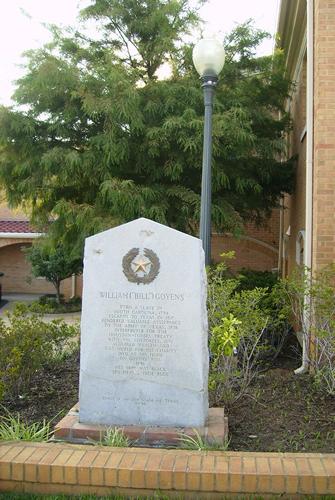
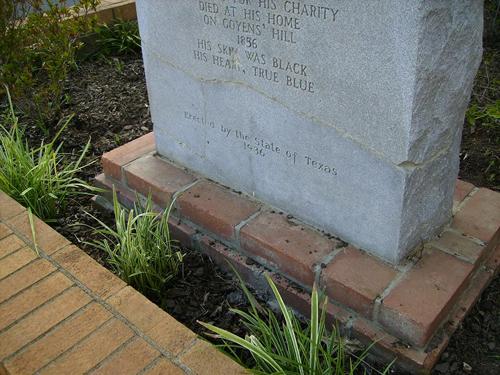
is the story of a free black man who lived and thrived in Nacogdoches
during the days of slavery. William Goyens' saga is documented fully
in a Master of Arts thesis written by Diane Prince at Stephen F. Austin
State University nearly thirty years ago.
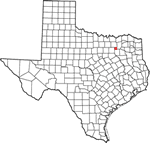
Goyens -- sometimes spelled Goings -- was born in Moore County, North
Carolina, in 1794, to a free mulatto father and a white mother. He
arrived in Nacogdoches
in 1820 and lived there until his death in 1856. He remained illiterate
but became a successful businessman and respected citizen of the community. |
 |
Goyens operated
a blacksmith shop, made and sold wagons, operated a freight line between
Nacogdoches
and Natchitoches, Louisiana, and ran an inn, or hotel-boarding house,
in his home, which was located near the Plaza Principal. Goyens married
Marey Pate Sibley in 1832. Sibley was white. She had one son by a
previous marriage, but no children were born to her marriage with
Goyens.
Despite his community standing, Goyens was a victim of slavery's harsh
realities. Several times whites claimed that Goyens was a runaway
slave and therefore their property. Goyens escaped seizure by taking
such matters to court, where he was represented by such community
leaders as Thomas Jefferson Rusk and Charles Stanfield Taylor, both
signers of the Texas Declaration of Independence. |
 |
 |
The best known
incident of this nature involved a man named William English, who
had Goyens apprehended while he was visiting Natchitoches in 1826.
Goyens convinced English to allow him to return to Texas,
where once again he established his free status in court.
Goyens performed good service for Texas
during the Revolution from Mexico. With Adolphus Sterne and Sam
Houston, he helped negotiate a treaty with the Cherokee to keep
them pacified in East
Texas while the Texans fought for their independence to the south
and west.
Goyens grew prosperous during the days of the
Republic and statehood. He built a large home and a gristmill
west of Nacogdoches.
His death on June 20, 1856, and subsequent burial near the junction
of Aylios and Moral creeks launched a legend and a mystery: what became
of Goyens' gold? Another story of buried treasure--not yet found--was
launched.
A dozen years ago, another familiar story to an organization such
as the East Texas Historical Association occurred in the Association's
office. A father and daughter from North Carolina named Goings came
looking for information on a long-lost descendant of their own ancestor,
who turned out to be William Goyens' father. They were white. Slavery's
legacy is long indeed.
All Things Historical
Jan. 20,
2002 Column
(Archie P. McDonald is Director of the East Texas Historical Association
and author or editor of over 20 books on Texas) |
|
|
 HOME
HOME