|
| For
the past year my son, Mike Oldham of Lefors,
and I have been presenting programs at museums about the buffalo-hunting
era. I tell of the hide-hunting process and Mike, a gunsmith, demonstrates,
shows and tells about the weapons, knives and reloading equipment
used in hunting. We also present numerous artifacts for those attending.
|
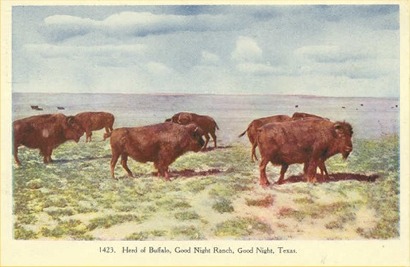
Herd of Buffalo,
Good Night Ranch, Goodnight,
Texas
Postcard courtesy www.rootsweb.com/ %7Etxpstcrd/ |
This
period, from 1868 to about 1878, is filled with historical
events including fights against the Plains Indians, the demise of
buffalo herds and, lesser known, the demise of a wolf species, the
Great Plains lobo.
Much unpublished information found buried in libraries and museums
has come to light because of the Internet. Many longtime historical
writings are found to be misleading or exaggerated in content. Our
presentation compares these writings.
For example, early-day estimates of the number of buffalo on the Great
Plains are probably high. Newly found sales tickets from major hide
buyers and freight charges from the few railroads servicing the hunting
grounds all point to less buffalo than previously thought.
The "wanton waste" of buffalo meat and byproducts by hunters and heralded
by the media and conservationists is somewhat refuted by railroad
freight listings showing where hundreds of tons of meat, tongues,
hair and bones were shipped to the Eastern markets. |
 |
 |
|
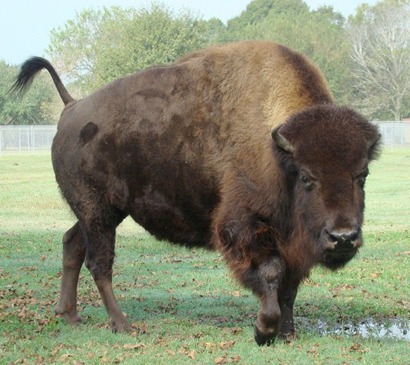
Did
you know a buffalo resembles a horse more than a cow in many ways?
A cow can run only a short distance where a buffalo can run for
miles like a horse. A buffalo can lie down, roll over on its back
time and again like a horse. That is how they plastered their hide
in mud to protect from the hordes of flying insects. A cow can only
lie down but not roll over.
The reason buffalo stampeded at instant notice was because of the
insects. Between flies, huge mosquitoes, buffalo gnats and hide
lice in summertime, their patience wore out. They lurched into a
gallop running into the wind leaving the insects behind trying to
catch up. Hunters often located herds by following the clouds of
insects left behind.
A buffalo sits down, then folds its knees to lie down like a horse.
It also rises on its front feet then raises its rear. A cow does
this in the opposite fashion.
Most hunters considered the buffalo extremely dumb. When fired on
with a rifle from a distance, they merely milled in a circle allowing
the hunters to kill an entire group in one spot. This was called
a "stand." The animals were not dumb, they were ruled by instinct.
To protect from the wolf, their most dangerous predator, they placed
the calves, yearlings and old animals in the center of a large circle,
protected by a circle of cows around that and the old bulls formed
another circle outside that.
When an animal was shot and dropped, the herd smelled blood and
death and began circling to protect from the lobo attack, not realizing
the danger was from bullets fired from a nearby hill where a hunter
lay hidden. That is the reason for the circling that caused a stand.
© Delbert Trew
"It's All Trew" February
10, 2008 Column
|
|
|
 HOME
HOME