|
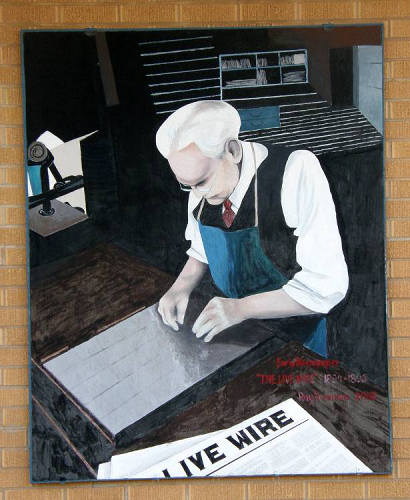
"Early
Newspaper
The Live Wire 1894-1896"
by Ray Freeman, 2002
Photo courtesy Barclay
Gibson, August 2009 |
| Hale Center Physician
Ray Freeman and wife Marjorie were instrumental in starting the Hale
Center Mural Project. |
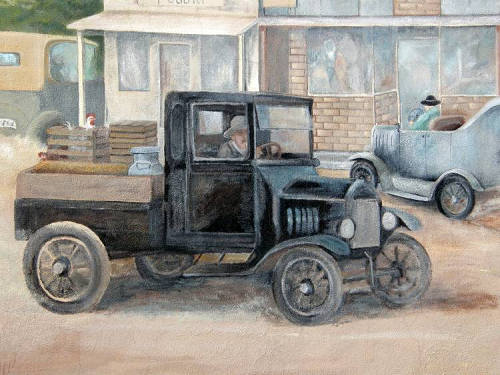
Early automobile
- "Downtown" mural detail
Photo courtesy Barclay
Gibson, August 2009 |
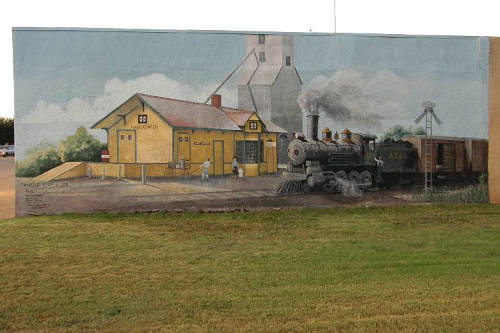
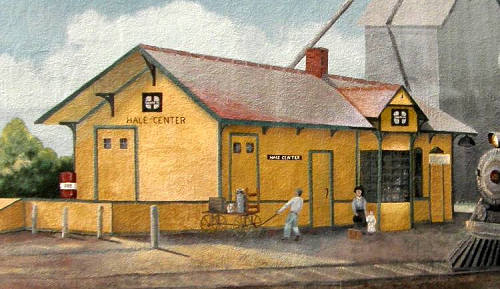
"Whistle
Stop" mural detail
Photo courtesy Barclay
Gibson, August 2009 |
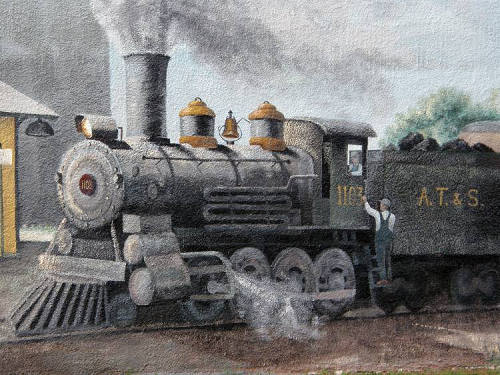
Locomitive
- "Whistle Stop" mural detail
Photo courtesy Barclay
Gibson, August 2009 |
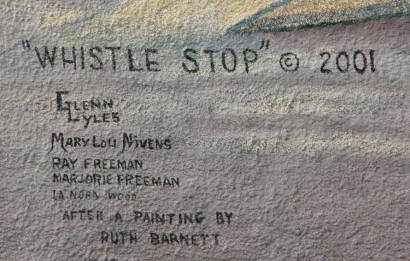
"Whistle
Stop" mural signatures
Photo courtesy Barclay
Gibson, August 2009 |
 |
 |
 |
Historical Marker:
( I-27 about 1/2 mile South of Hale
Center)
Ranching and
Farming in Hale County
Pioneer ranchers
began to settle Hale
County in the early 1880s. Land was plentiful and cheap, but life
was hard. Many settlers lived in dugouts. Supplies were freighted
from Colorado
City until the railroad reached Amarillo.
Cattle roamed the
free grazing land until round-up time, when they were separated according
to brands. Ranchers
earned extra income by selling buffalo bones for fertilizer, working
on the railroad,
or hiring out to larger ranches. Many worked at the Circle Ranch of
Col. C. C. Slaughter, which covered land in four counties. Other significant
ranches included the Callahan, Barton, and Norfleet ranches. When
the public land was gone and free grazing ended, the larger ranches
were divided into smaller tracts.
The transition from ranching
to farming was difficult. By the early 20th century, wheat farming
and dairy production began to replace ranching
operations. The Dust Bowl and Depression of the 1930s brought new
hardships. Soon after World
War II, however, a high percentage of the cultivated acreage in
Hale County was
under irrigation. This allowed for crop diversification with high
yields of grain sorghum, corn,
soybeans, wheat, vegetables, and livestock production. Cotton
has become the leading cash crop.
(1985) |
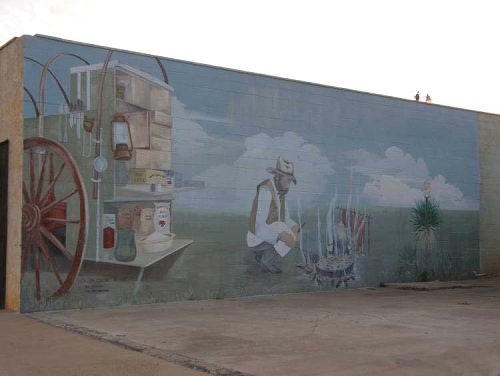 |
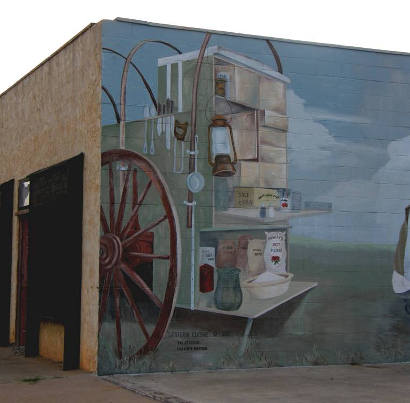
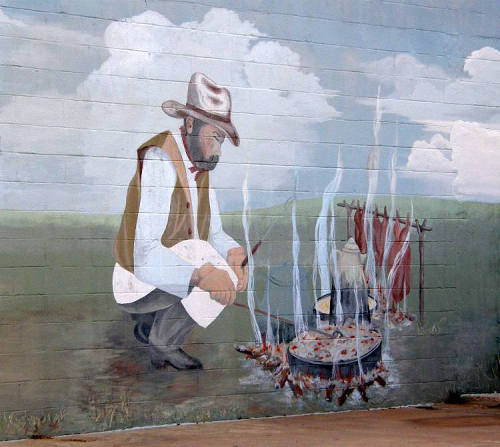
Wagon - "Western
Cuisine" mural detail
Photo courtesy Barclay
Gibson, August 2009 |
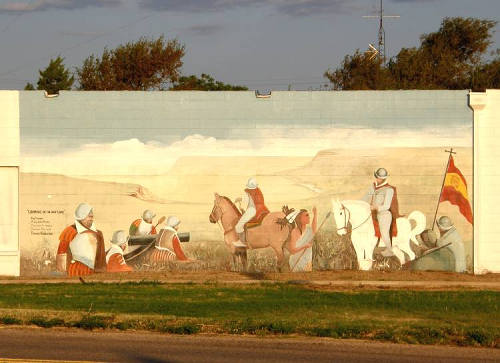
"Coronado
On The High Plains"
Photo courtesy Barclay
Gibson, August 2009 |
|
|
 HOME
HOME