|
 |
History in
a Pecan Shell
One of the first
settlers in the area was Wm. S. Gamel in 1846. Fort Mason was
established in 1851 and settlers were attracted by the protection
that the fort provided from Indians. Germans moved into the area from
Fredericksburg and even
soldiers settled the town after their discharge. In 1858 the town
received mail as well as the fort's supplies from San
Antonio. The post office opened in town and the name was changed
from Fort Mason to Mason that same year.
Fort Mason: The fort
played no part in the Civil War other than being surrendered to Confederate
forces in 1861. The Confederates didn't need it and the townsfolk
appropriated much of the abandoned fort and equipment. It was reestablished
in 1866 and then abandoned for good in 1868.
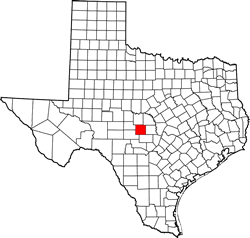
In the 1870's Mason
County was the scene of a violent feud between German settlers
and Anglo ranchers. Known as the "Hoo-Doo"
War or the Mason
County War - it was a nasty business of many killings with no
one ever standing trial.
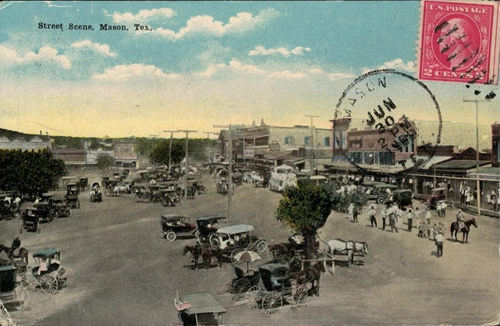
Mason became a stage stop after the war and it never did get a railroad
- usually an very important milestone to a developing town. In 1923
Mason was the largest "city" in Texas without a railroad. |
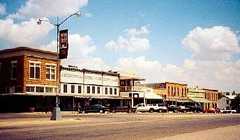 |
Mason street
scene
TE Photo, 2000 |
Mason, Texas
Landmarks & Attractions
|
Fort
Mason ›
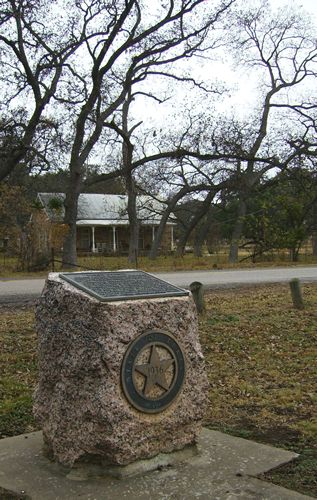
Reconstructed officer's quarters built on original foundation. After
the fort was abandoned in 1869, most of the stone was carted off to
build Mason's residences.
Photo
courtesy Sarah
Reveley, January 2006 |
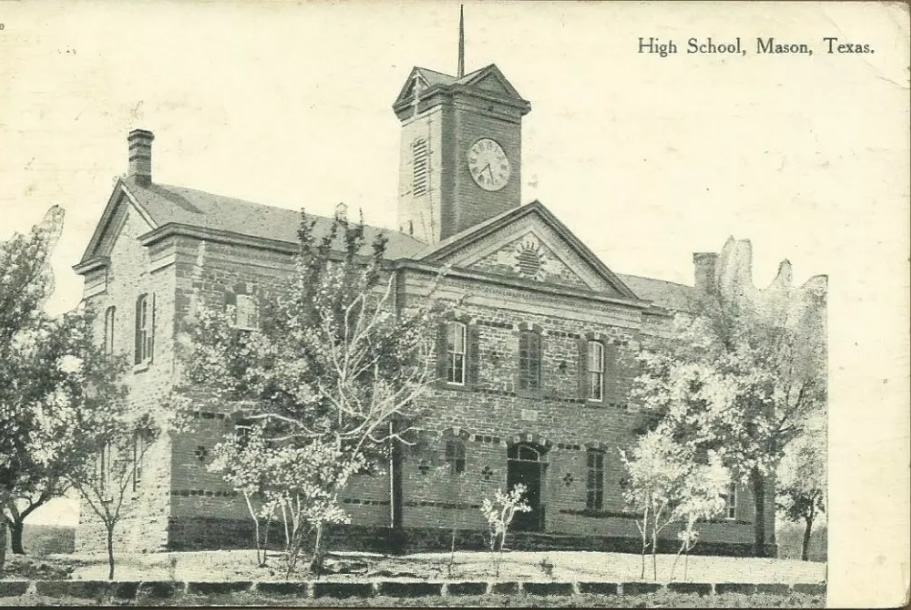
The Mason
County Museum: 300 Moody Street In an old schoolhouse c. 1875
- built from salvaged stone from Fort Mason's buildings.
Fort Mason
City Park: one mile South of town on Highway 87 - 125 acres
with lots of shade and picnic tables, playground, RV park etc.
|
|
|
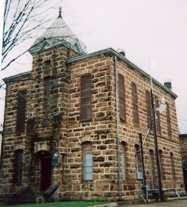
The
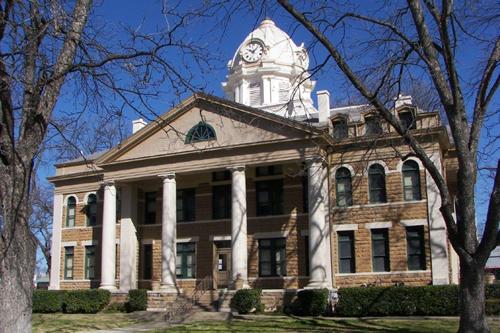
Mason County Jail, still serving its original purpose
Photo courtesy Shannan
Yarbrough, 2005 |
|
|
|
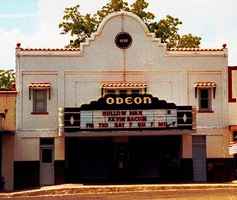
The Odeon
Theatre in Mason
TE Photo, 2000 |
|
Mason, Texas
Chronicles
On
the Road with Basse Express by Michael Barr
"Basse Express was one of the most recognizable businesses in
the Texas Hill Country... In 1949 a business arrangement turned daily
operations of Basse Express over to Ruben Rode, owner of Rode Freight
Lines in Mason. The local terminal was located at 215 East Park Street
(formerly the Peanut Warehouse)." |
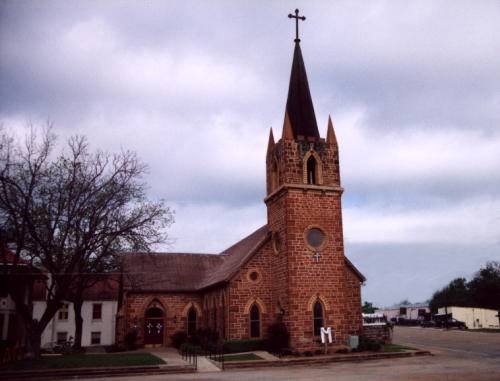
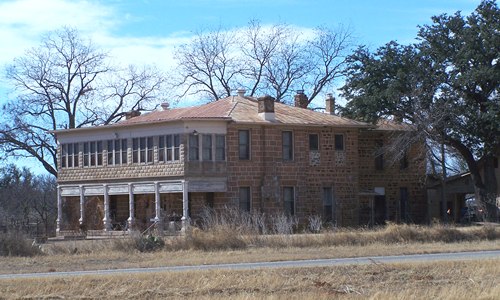
Mason
Architecture
Photo courtesy Ernie
Wymer, January 2008 |
Mason County
Chamber of Commerce
915-347-5758
108 Fort McKavett St.
Website: http://www.masontxcoc.com |
Mason, Texas
Forum
Subject: Cisterns
in Mason
I am doing research on historic above ground cisterns (water towers)
in Mason, Texas. I was recently told that an article was written in
the last five years stating that a greater number of these cisterns
have been preserved in Mason than any other town in Central Texas.
I have not been able to find this article and asking your readers
if they can provide me with the name of the magazine and date of the
publication. - Gerron Hite, Architect, ghite734@gmail.com, September
04, 2012 |
| Texas
Escapes, in its purpose to preserve historic, endangered and vanishing
Texas, asks that anyone wishing to share their local history, stories,
landmarks and new or vintage/historic photos, please contact
us. |
|
|
 HOME
HOME