|
STAMFORD, TEXAS
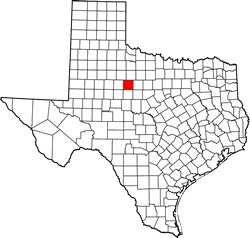
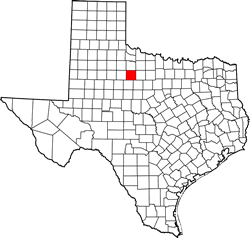
Jones
County/ Haskell
County, Panhandle
/ Central
Texas N
32° 56' 57" N, 99° 47' 24" W (32.949167, -99.79)
Highways 277, and 6, FM 1420 and FM 2834
15 Miles S of Haskell
17 Miles N of Anson
40 Miles N of Abilene
ZIP code 79553
Area code 325
Population: 2,907 (2020)
3,124 (2010) 3,636 (2000) 3,817 (1990) |
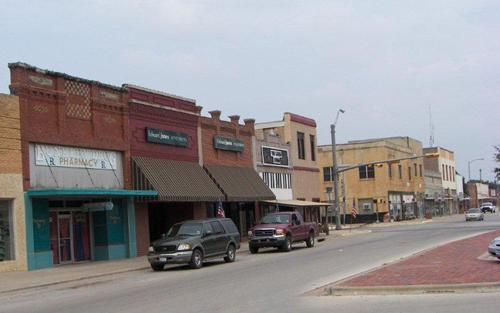
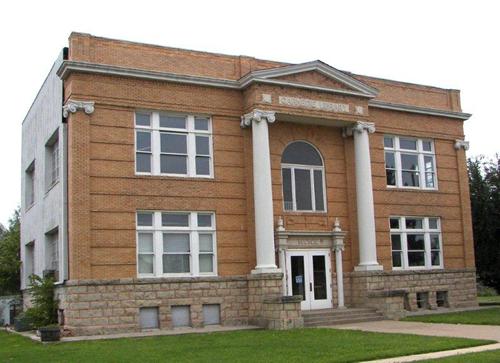
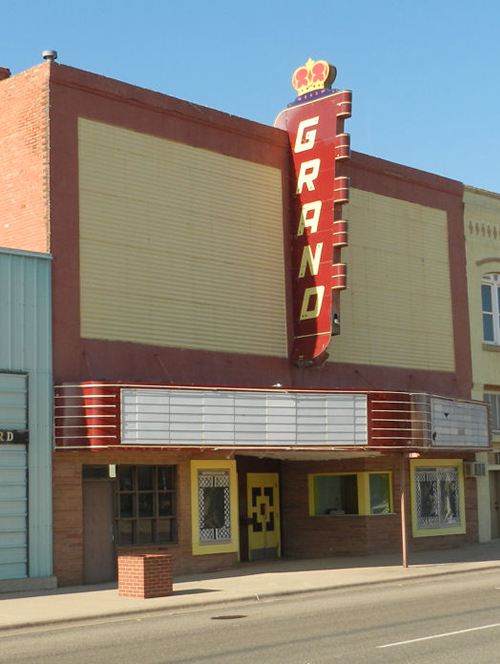
Main street (Swenson
Avenue) buildings in Stamford.
Photo courtesy Terry
Jeanson, September 2007 |
History
in a Pecan Shell
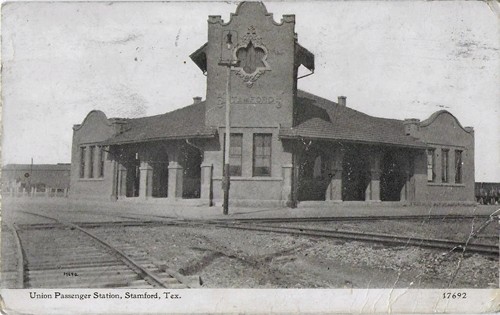
A Texas Central Railroad executive named the town after hometown in
Connecticut. The town dates from 1899 when a railroad boxcar was put
on a siding and served as the community’s first post office. In 10
short years the town swelled to almost 4,000 people.
Stamford’s importance was cemented in place by a flour mill that was
in operation from 1906 until it burned in the mid 1940s.
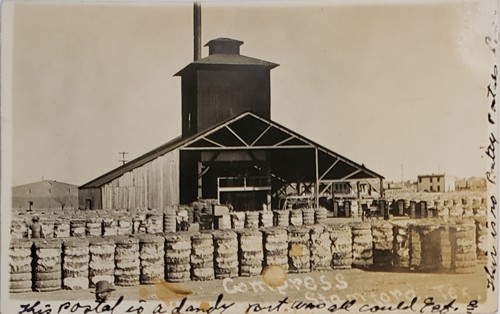
Stamford had a railroad roundhouse and shops as well as a cottonseed
oil refinery, brick yards and a foundry.
In 1907 the Methodist church opened the Stamford Collegiate Institution
(which later became Stamford College). After a fire in 1918 and decreased
enrollment due to WWI,
the college closed in 1920 as McMurry College was opening in Abilene.
During WWII
a private school for military pilots opened at Arledge Field. The
town has been hosting The Texas Cowboy Reunion every 4th of July since
1930.
Rodeos are held just west of town adjacent to the Swenson Ranch. The
Cowboy Country Museum was founded in the 1970s.
The population of Stamford has remained over 4,000 from the 40s through
the 80s when it entered a slight decline. It fell to 3,817 for 1990
and then to 3,124 for the 2010 census. |
The Texas Cowboy
Reunion:
From Old-time
Cowboy by Mike Cox
"When the Baylor County cowboy reunion played out is not known,
but the concept calved again in 1930. Despite the ongoing Great
Depression, 13 businessmen at Stamford (which is on the border of
Haskell and Jones counties) met to talk about organizing an event
calculated to cheer people up -- and maybe stimulate the ringing
of local cash registers.
Given that their town lay near two large ranches, those civic leaders
decided to put on a rodeo called the Texas Cowboy Reunion. In addition
to giving dispirited Texans something to whoop and holler about,
the event would help preserve the state's cowboy heritage. Whether
the first cowboy reunion in 1896 led to the later reunion can only
be speculated on, but some if not all of those organizers would
have been old enough to remember the pioneer cowboy reunion in Baylor
County.
Interestingly, in chartering the Texas Cowboy Reunion Old-Timers
Association, the Stamford men stipulated that members had to have
worked on a ranch prior to 1895 and be at least 55 years old. Now,
the only requirement is that a member has to have cowboyed and be
45 or older.
The annual gathering continued even during World War II and is still
held for three days every summer around July 4." Read
full article
|
Stamford, Texas
Landmarks & Attractions:
|
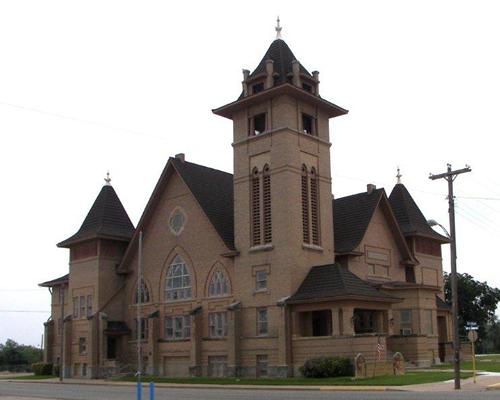
The St. John's
Methodist Church, built in 1910, has a one-hundred foot tower and
was, for many years, the tallest church between El
Paso and Dallas.
Photo courtesy Terry
Jeanson, September 2007 |
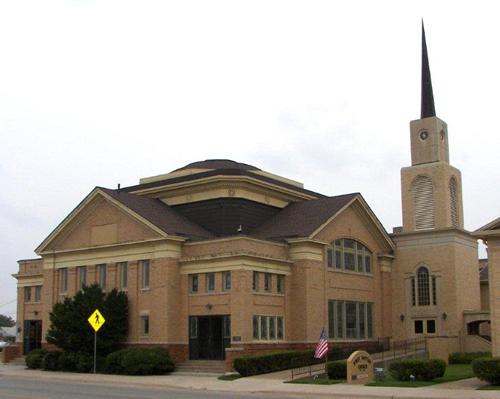
Another view
of the St. John's Methodist Church in Stamford
Photo courtesy Barclay
Gibson, 2004 |
The First Baptist
Church on Swenson Avenue was built between 1908 and 1909.
Photo courtesy Terry
Jeanson, September 2007 |
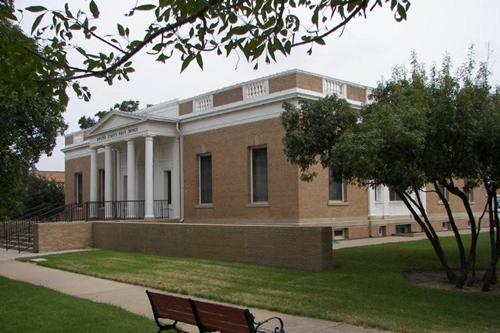
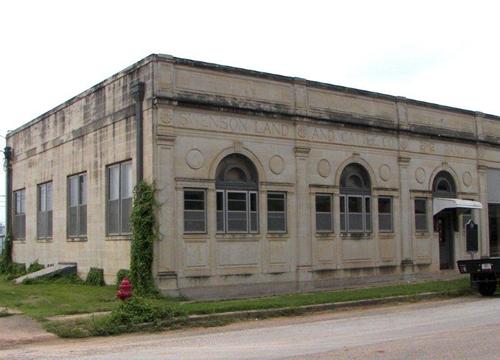
The Swenson Land
& Cattle Co. established its headquarters in Stamford in 1927.
Photo courtesy Terry
Jeanson, September 2007 |
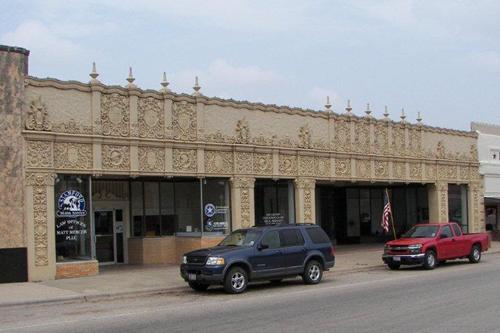
More Stamford
main street scene
Photo courtesy Terry
Jeanson, September 2007 |
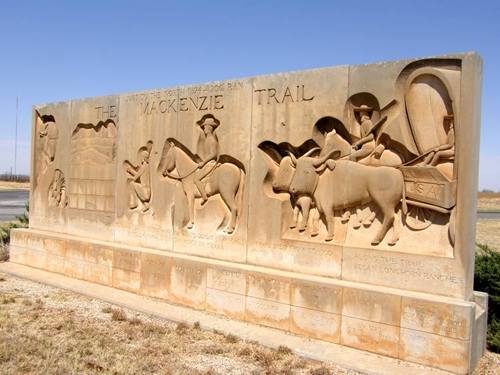
| The MacKenzie
Trail Monument
is about 1.5 miles north of Stamford at the intersection of US277
and SH6, just across the Haskell
County line. - Barclay
Gibson |
Mackenzie
Trail
by Clay Coppedge
"The best of what's left of the Mackenzie Trail today is probably
on private property. You're near it when you're at the intersection
of U.S. 277 and Texas 6 in , where a monument tells you the trail
ran a little north of there. The trail also ran between Dickens
and Spur, so when you're on
parts of U.S. Highway 82 from Dickens
to Lubbock you're probably
following Mackenzie's path pretty closely." - Read
full article |
Stamford, Texas
Chronicles:
From "Get
Along Little Turkeys..." by Mike Cox
"... No matter that it's been largely forgotten, herding large
flocks of turkeys from Point A to Point B once was as much a part
of the wild west as gold rushes, gambling and gunfights. The reason
was the lack of refrigeration. Meat only stayed fresh on the hoof--or
scaly four-toed feet. With large trucks yet to be invented, and
assuming no rail service, the only way to get large numbers of turkeys
from the farm to the dinner table was for mounted men to herd them.
Though it probably happened earlier, the first known Texas turkey
drive took place around 1907, when pioneer Stamford resident R.M.
Dickenson paid to have 500 turkeys driven 18 miles from
Haskell to Stamford. The drive didn't work out too well..."
Read
full article
|
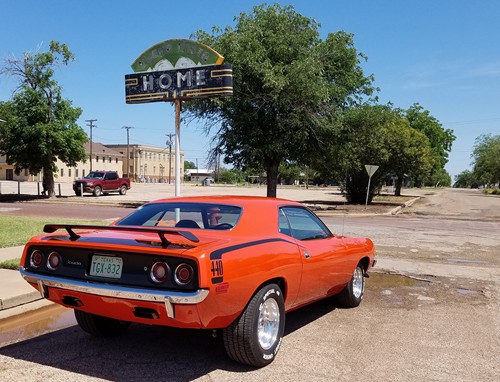
Buena
Vista Home 1928 Neon Sign
Jimmy
Dobson Photo, July 2017 |
Stamford, Texas
Vintage Images:
|
| Texas
Escapes, in its purpose to preserve historic, endangered and vanishing
Texas, asks that anyone wishing to share their local history, stories,
landmarks and recent or vintage photos, please contact
us. |
|
|
 HOME
HOME