|
 |
Established
for bombardment crew training in 1942, the facility began life under
the name Pyote Army Air Field, being just a mile from the town of
Pyote and constructed
on 2,700 acres of land belonging to the University of Texas.
Two 1½ mile long runways (150 feet wide) and five huge hangers comprised
the most important infrastructure, but there were also barracks, warehouses,
mess halls and, of course, an emergency fire department.
The first personnel arrived before the base was finished and by October
1944, the population of the base was over 6,500 soldiers, mechanics,
trainees and civilian technicians. Within four months of its opening,
it became the largest bomber installation in the U.S. It also claimed
a more dubious distinction - being one of the most isolated bomber
bases in the U.S.
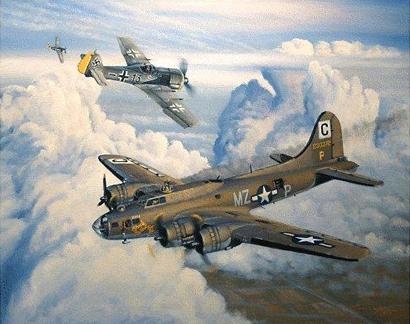
The base became fully operational in January, 1943 with the arrival
of the 19th Bombardment Group. Training was for the various gunners
on the B-17
Flying Fortresses. Later, in the spring of 1944, the base was
re-designated as the 19th Combat Crew Training School. In June of
1945 the base broke the record for the most training hours flown in
a month, in a week, and in a day. |
 |
After
the war, control of the base was transferred from the Second Air Force
to the San Antonio Air Tech Service Command and became an aircraft-storage
depot (graveyard). Over two thousand planes were stored here in 1948,
one of which was the Enola Gay, which dropped the first atomic bomb
on Hiroshima. In 1953 the plane was flown to Washington, to be preserved
in the National Air and Space Museum.
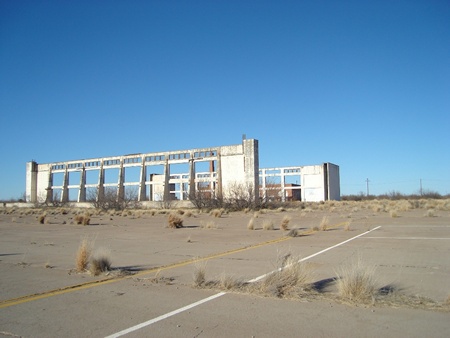
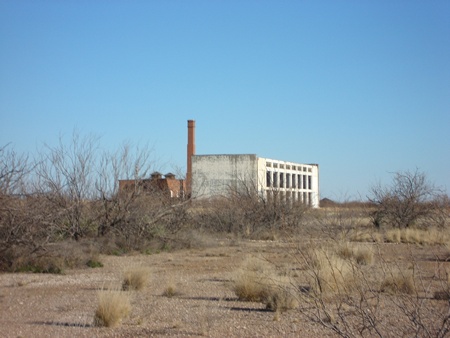
The base became inactive after the Korean War and the planes were
sold as scrap. A RADAR base operated off and on during the 50s and
60s, but it was deactivated in 1966. The West Texas Children's Home
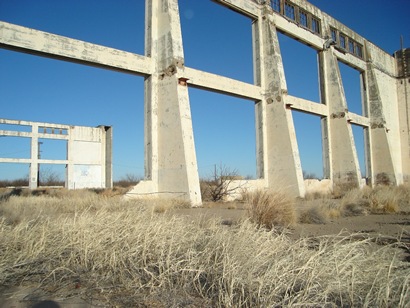
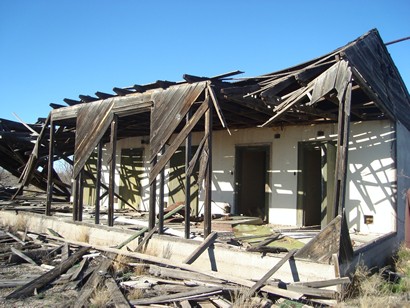
occupied some of the former buildings, but the hangers and runways
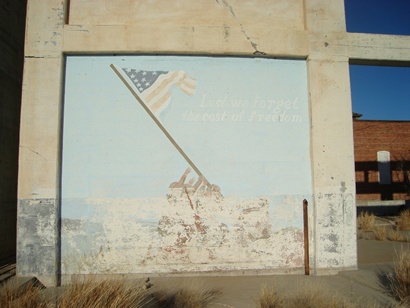
deteriorated into what you see here. |
Photographer's
Note:
"Here are some photos taken about April of '07 at the old Rattlesnake
Bomber Base in Pyote.
There's not much left there to see, but what is still there is incredible.
Overgrown weeds and all, it's still like stepping into the past."
- Lexie Nichols and Jordan Gibson, September 17, 2007 |
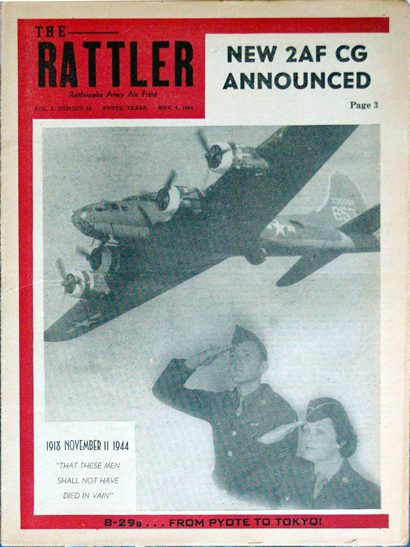
Cover of the
November 1944 issue of "The Rattler"
Courtesy Mel
Brown |
For
your article on the Rattlesnake Bomber Base, I would like to share
these sample pages of their base newspaper from 1944. Ol' Rattlesnake
Field is quite famous in the annals of Texas
WW II aviation history and has been seen in a couple of movies
as well. Kevin Costner's first movie was titled Fandango and is about
a last, cross country type fling of four UT guys who are drafted during
the Vietnam war. At one point they arrive at the old bomber base to
find a pothead aviator who gives parachute flights to those willing
to pay.
Perhaps
my favorite vignette of the old base comes in the wonderful book FLIGHT
OF PASSAGE: A TRUE STORY by Rinker Buck. Buck tells the story of the
time he and his older brother flew a restored Piper Cub from New Jersey
to Los Angeles via Pyote Field. It happened over the long weekend
of July 4, 1966 and is a great little read if you ever have time.
In it he tells about the prodigious rattlesnake gathering business
being run out of an old hangar still standing out there. - Mel
Brown, Austin, September 27, 2007 |
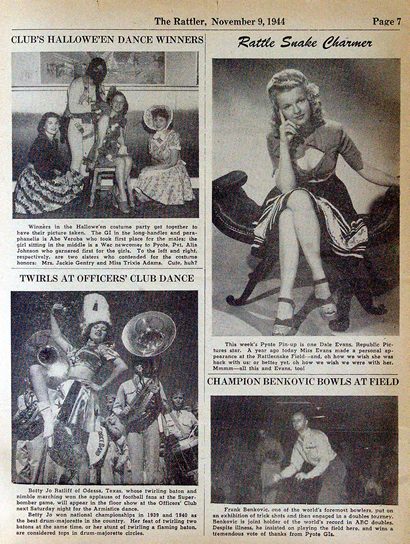 |
Note: The "Rattle
Snake Charmer" (upper right-hand corner) featured in this issue
of The Rattler was Uvalde,
Texas native Dale Evans.
Courtesy Mel
Brown |
Painting of
a B-17 "Flying Fortress" over Germany
Courtesy www.wpclipart.com |
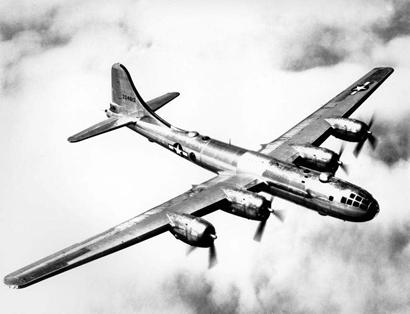
A B-29 "Superfortress"
Courtesy commons.wikimedia.org |
|
|
 HOME
HOME