|
East
Texas has produced two remarkable men named Ed Clark. Today’s subject
is Edward Clark of New Orleans, Alabama—and Marshall,
Texas.
Edward Clark was born in New Orleans, Louisiana, in 1815. Following
the death of Clark’s father, he and his mother moved to Montgomery,
Alabama, where he was educated for a legal career. Clark moved to
Marshall, Texas, in 1841,
and opened a legal practice. He married there, established a home,
and began a thriving practice in the Texas
Republic. |
|
|
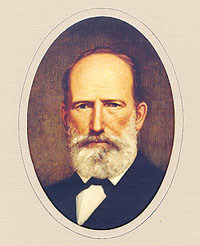
Govenor Edward
Clark
Wikimedia
Commons
|
|
Clark served
as a delegate to the Texas constitutional convention in 1845, then
terms in the House of Representatives and the Senate of the state
legislature. He was on the staff of Governor
James Pinckney Henderson during the Mexican-American War, and
received appointment as secretary of state for Texas by Governor
Elijah M. Pease. Clark was elected lieutenant governor in 1859,
when Sam Houston
was elected governor.
Houston and
Clark assumed office just in time to deal with the secession
issue. Houston’s
whole political career in Texas had
worked toward securing statehood for Texas
and keeping it in the Union. Clark’s sympathies were more "southern,"
but Houston
decided policy as long as he was governor. That ended in February
1861.
Of all the Deep South governors, only Houston
refused to call a secession convention after South Carolina began
the process on December 20, 1860. When he refused to do so, secessionists
went around him to persuade county judges to call elections for
delegates to such a convention.
Houston then
called the legislature into special session but it did no good since
most of the legislators also had been elected as delegates to the
convention. They met on January 28, 1861, and quickly passed an
ordinance of secession.
Convention members remembered that all office holders had taken
an oath to support the Texas and US Constitutions, so they decided
they must be sworn in again, this time pledging allegiance to the
new and separate governments of Texas and the Confederacy.
When Houston
refused to do so, the convention declared the office of governor
vacated, and that elevated Clark to the post. He took the required
oath of office and went right to work raising troops and money and
generally readying Texas for war. Clark wanted to make his temporary
governorship a permanent one, but lost the first Confederate election
for the office to Francis R. Lubbock. Clark served in the Confederate
army, then practiced law in Marshall
until his death in 1880.
© Archie
P. McDonald, PhD
All
Things Historical
October 5, 2004 column
A syndicated column in over 40 East Texas newspapers
Distributed by the East Texas Historical Association. Dr. Archie
McDonald is the Association's executive director and author of more
than 30 books on Texas history.
|
| Books
by Archie P. McDonald - Order Here |
|
|
 HOME
HOME