|
AURORA, TEXAS
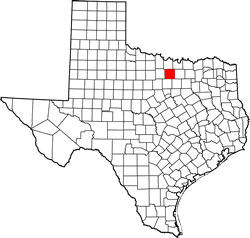
Wise
County,
Central Texas
North
33°3'21"N 97°30'35"W (33.055942, -97.509615)
Highway 114
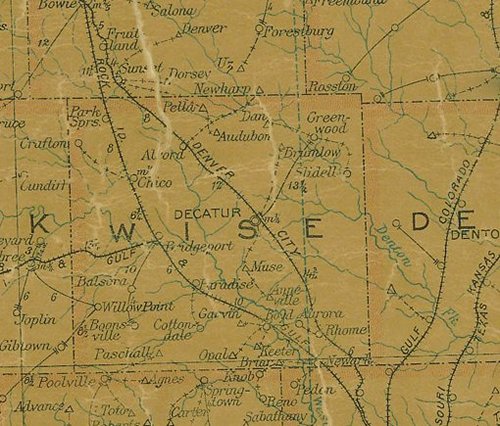
10 miles SE of Decatur
ZIP code 76078
Area code 817
Population: 1,390 (2020)
1,220 (2010) 853 (2000) 623 (1990) |
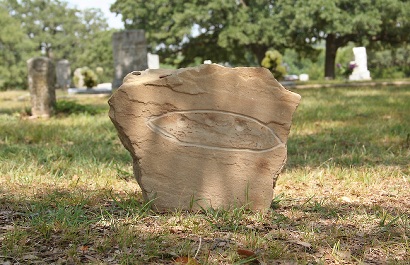
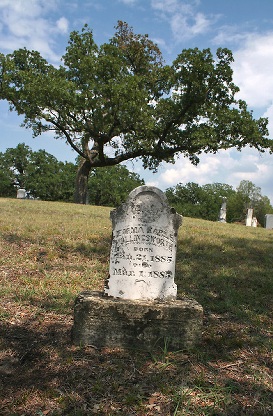
Aurora Cemetery
Alien Grave Marker
Photo courtesy Lori
Martin, July 2012 |
|
History in
a Pecan Shell
Settlement of
the area began in the late 1850s. The pastoral beauty of the place
impressed a man named William Stanfield enough to name it after
the Roman Goddess of Dawn.
The town became a trading center for the first twenty years of its
existence and a post office was granted in 1873. Within 10 years
Aurora could boast two schools, two hotels, two gins, and a population
that may have been as high as 3,000.
A spotted fever epidemic in late 1888 practically evacuated the
town by 1889 and the Fort Worth and Denver City Railroad which was
due to arrive in 1891 chose nearby Rhome
for their depot instead of Aurora. The town was heading downhill
fast.
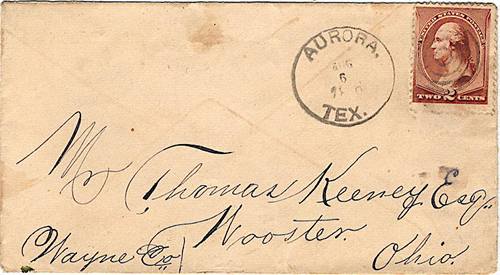
In 1897, a local cotton buyer
wrote a story about a crashed airship near Aurora. What makes this
story different from other sightings was the recovery of “a little
green man” (who didn’t survive the crash) and was buried in the
Aurora cemetery. “Airship”
sightings were frequent in the late 1890s and there had been
several sightings in and around Fort
Worth. The story,
now over a hundred and seven years old has carved a place for tiny
Aurora in Texas folklore. (See Readers'
Forum)
By 1901 postal service was rerouted and the Aurora post office closed.
It might have become a ghost town if not for the 1939 construction
of State Highway 114.
Aurora today still retains the rolling terrain and the picturesque
cemetery is just south of the highway – just follow the signs.
Aurora Cemetery Marker ›
Aurora Cemetery Photos ›
The Aurora UFO Incident ›
|
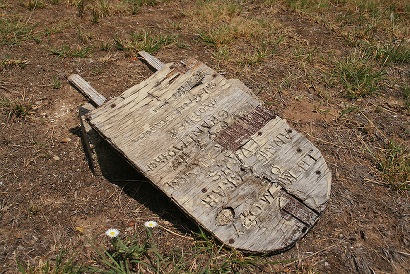
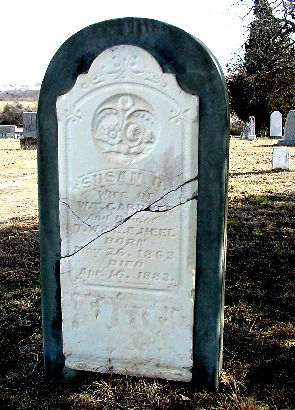
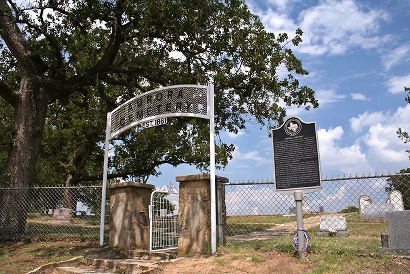
Aurora Cemetery
Tombstone
Photo courtesy Lori
Martin, July 2012 |
Aurora Cemetery
Tombstone
Photo courtesy Lori
Martin, July 2012 |
Aurora Cemetery
Tombstone
TE Photo, 2004 |
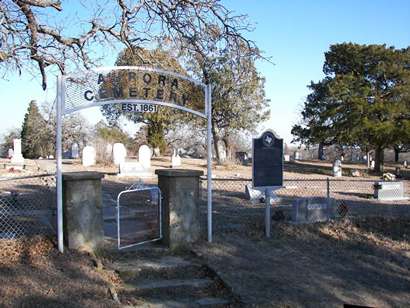
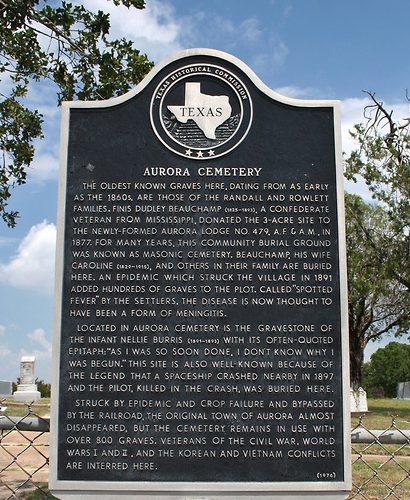
Aurora
Cemetery Historical Marker
Photo courtesy Lori
Martin, July 2012 |
Aurora Cemetery
Historical Marker
The oldest known
graves here, dating from as early as the 1860's, are those of the
Randall and Rowlett families. Finis Dudley Beauchamp (1825-1893),
a Confederate veteran from Mississippi, donated the 3-acre site to
the newly formed Aurora Lodge No. 479, A.F. & A.M., in 1877. For many
years, this community burial ground was known as Masonic Cemetery.
Beauchamp, his wife Caroline (1829-1915), and others in their family
are buried here. An epidemic which struck the village in 1891 added
hundreds of graves to the plot. Called "spotted fever" by the settlers,
the disease is now thought to have been a form of meningitis.
Located in Aurora Cemetery is the gravestone of the infant Nellie
Burris (1891-1893) with its often-quoted epitaph: "As I was so soon
done, I don't know why I was begun." This site is also well known
because of the legend that a spaceship crashed nearby in 1897 and
the pilot, killed in the crash, was buried here.
Struck by epidemic and crop failure and bypassed by the railroad,
the original town of Aurora almost disappeared, but the cemetery remains
in use with over 800 graves. Veterans of the Civil War, World
Wars I and II,
and the Korean and Vietnam conflicts are interred here. |
 |
 |
 |
Aurora, Texas
Forum
Subject:
Aurora, Texas alien
I am the great-great-great granddaughter of Finis Dudley Beauchamp.
Dudley is the person who donated the family cemetery to the town
of Aurora. My great grandmother, Robbie Reynolds, was the 91 year
old person that so many of the online articles mention as having
been interviewed in the 1970's.
As much as I wish the whole story were true, the fact of the matter
is, it's not. My great-grandmother and I were very close. She said
that the whole story was a hoax, and the original interview included
that. I'm not sure how the story went from her saying it was a hoax
to the story that her parents went to check out the situation, and
wouldn't allow her to go. In your
article you mention that most people of the time were illiterate.
I know for sure that my great-grandmother and her mother and father
could read and write very well. I also know that Robbie Townsend,
the woman for whom my great grandmother was named, was a teacher.
I know the truth isn't nearly as cool as the stories that have been
told for the last 100 years. I just wanted to set the story straight.
- Sincerely, Robbie Fields, El Paso, Texas, April 09, 2005
|
| Texas
Escapes, in its purpose to preserve historic, endangered and vanishing
Texas, asks that anyone wishing to share their local history, stories,
landmarks and vintage/historic photos, please contact
us. |
|
|
 HOME
HOME

 Texas
Gulf Coast
Texas
Gulf Coast East
Texas
East
Texas Central
Texas North
Central
Texas North Central
Texas South
Central
Texas South Texas
Panhandle
Texas
Panhandle South
Texas
South
Texas Texas
Hill Country
Texas
Hill Country West
Texas
West
Texas Texas
Ghost Towns
Texas
Ghost Towns Texas
Counties
Texas
Counties