|
 |
History in
a Pecan Shell
Only
Indianola's
story comes close to equaling the Thurber saga. Once the largest city
between Fort
Worth and El
Paso, Thurber became a ghost due to corporate decisions and not
the forces of nature, as was the case with Indianola.
Thurber was the first city in Texas to be completely electrified
and amenities included refrigeration and running water. It did, however
have an abnormally high child mortality rate that still puzzles historians.
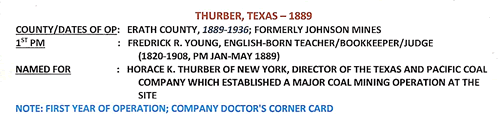
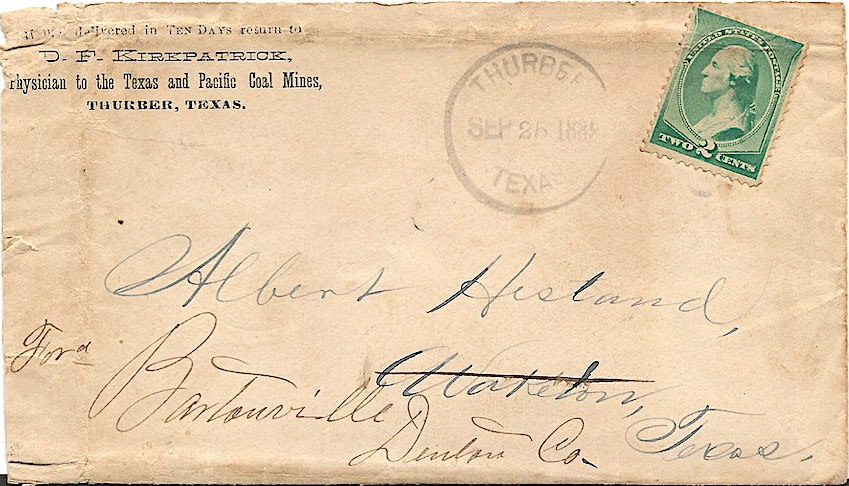
Thurber was built by the Johnson Coal Company
that was later bought out by The Texas and Pacific
Coal Company in 1888. It's mining operation provided the fuel
for coal-burning locomotives of numerous railroads,
including the Santa Fe, the Southern
Pacific, the Texas & Pacific and
the "Katy". At one time the coal deposits
were thought to be inexhaustible. We are told there are still millions
of tons left. |
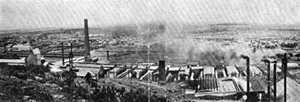
The Thurber Brick
yards.
Old post card TE Archives |
Who
Needs a Watch when Whistles are Free
A brick factory was added to the mining operations
since they had the material, the fuel, and the railroad
to ship the end product. Tile was manufactured as well, but it was
the thick, heavy Thurber paving brick that paid the bills. Congress
Avenue in Austin
was paved with them as well as Seawall Boulevard
in Galveston.
Governor "Ma" Ferguson's experimental highway from Belton
to Temple
was constructed with Thurber Brick and asphalt (or macadam as it was
then called, after its inventor, a man named MacAdam). Mr. Leo Bielinski
who has ties to Thurber dating back to his grandfather's arrival from
Poland in 1889, adds that Camp Bowie Boulevard
was paved with Thurber brick as well as The Fort
Worth Stockyards.
The city lived by whistles. From 5:30 when the first miners would
rise, to the noon whistle, then the railroad whistles that would signal
the approaching end of the school day and finally the quitting whistle.
Armed guards patrolled a huge fenced perimeter around Thurber, not
to keep workers in, but to keep Union organizers out. The mostly immigrant
workforce was by and large pretty gruntled, but why take chances?
The Union eventually infiltrated and won and Thurber became a Union
town in 1903. *
(*After negotiating with the Union, Thurber bricks had an added feature
impressed into each brick - the Triangle and initials T.B.T.) |
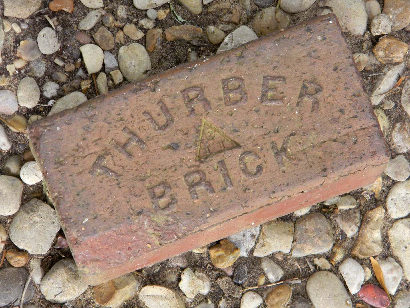
A Thurber Union-Made
Brick
TE Photo |
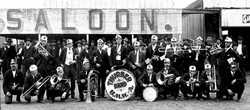
The Thurber Mine
Workers' Union Band
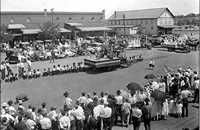
Courtesy Thurber Historical Assn |
Selling Liberty
Bonds during WWI
Courtesy Thurber Historical Assn |
Thurber's Demise
In 1915 oil was
piped in to fuel the brick furnaces. Ironically, the switching of
locomotives from coal to oil was in part responsible for Thurber closing.
They were using the product that was putting them out of business.
Physically, Thurber ceased to exist when the company sold the houses
for the price of lumber and they were carried away piece-meal or intact.
After the brick-making operation closed, workers were permitted to
live rent-free and were given a thirty-dollar stipend (in scrip) per
month.
More recently, in the late 1960s and early 70s, Thurber became a center
for not one, but two controversial religious communes. The Children
of God, and "The Soul Clinic." They were evicted from private property
they were leasing in the vicinity sometime around 1972. |
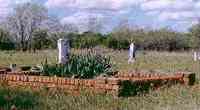
Thurber Cemetery
TE photo |
Thurber, Texas
Chronicles
Thurber,
Texas by Clay
Coppedge
"There never was a Texas town quite like Thurber and there
never will be again. In a state not known for coal, Thurber produced
tons of "black diamonds" for more than 30 years. In a state known
for its independence, Thurber was a wholly company-owned town, right
down to the last nail in the last miner's house, and became a union
town populated by mostly foreign workers.
Thurber, along with Indianola, is perhaps the state's most celebrated
ghost town because it was contrary to ordinary in every way. Situated
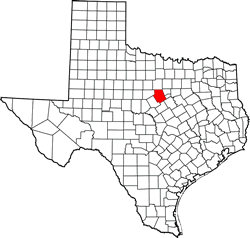
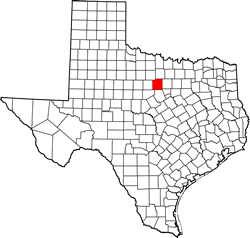
in the northeast corner of Erath County, almost to the Palo Pinto
County line, Thurber was different from every other Texas town of
its time... more"
Thurber
Booze from "Texas Tales" column by Mike
Cox
"...Though those three phases of Thurber's history - coal,
bricks and oil -- are well known, much less known is that the town
became a production center for a fourth product: illegal booze...
more"
The
Ghost of Thurber by Bob Hopkins
“If people say that I didn’t see a ghost, you tell em to come see
me! I saw it with my own two eyes and I know what I saw.” |
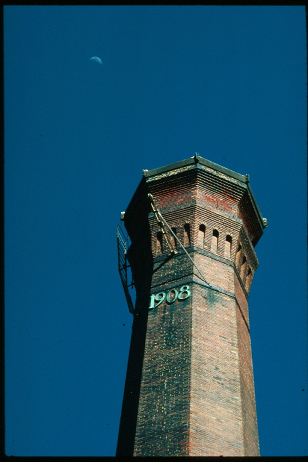
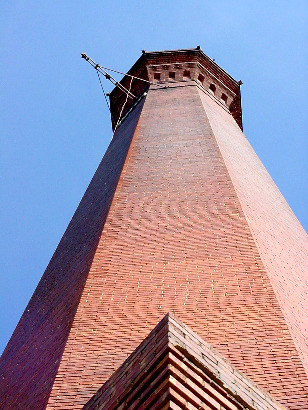
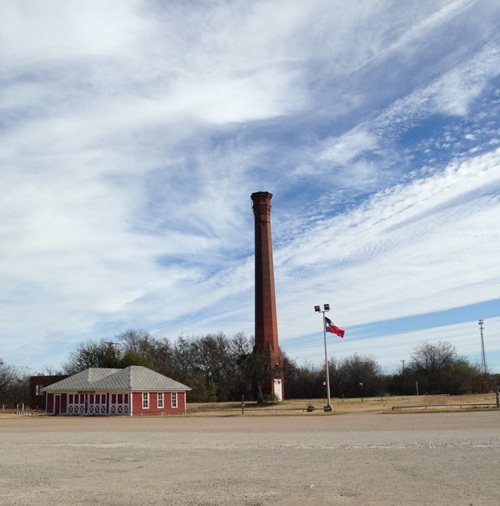
The 1908 smokestack
in Thurber
Photo courtesy TXDoT |
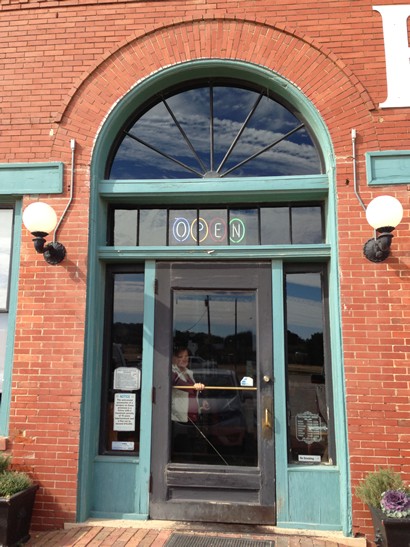
Mercantile
Building, now Smokestack Restaurant
Photography by Kat
Copeland © 11/2017 |
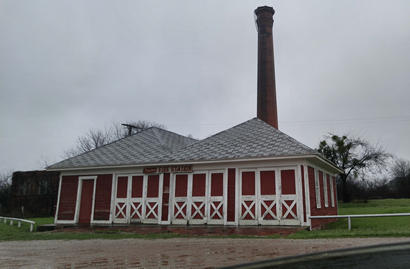
Thurber fire
station with the smokestack in the background.
Photo courtesy Dustin
Martin, March 2016 |
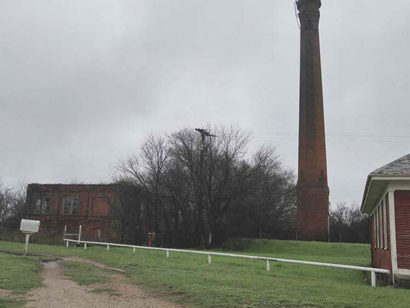
An abandoned
building with the smoke stack in the background.
Photo courtesy Dustin
Martin, March 2016 |
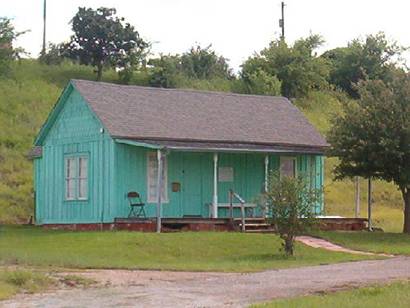
A typical miner's
house - "Speegle House"
Photo courtesy Jonnie Goodwin, Thurber Historical Assn, 2007 |
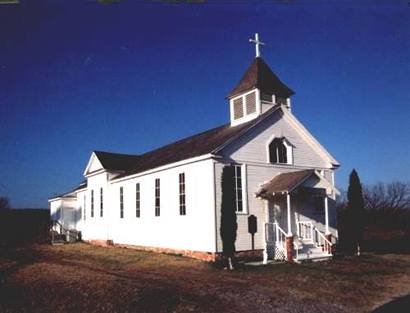
St. Barbara Catholic
Church in Thurber
Photo courtesy Barclay
Gibson, February 2004 |
|
New
York Hill was the name given to the neighborhood
for the white-collar clerks and brick-counters that the company
recruited from the East Coast. In truth, they actually oversaw the
operations of the Ranger Oil Field. New York Hill is now the site
for the Restaurant of the same name.
Thurber has a yearly reunion every year on the 2nd Saturday in June
and has done so since 1937.
|
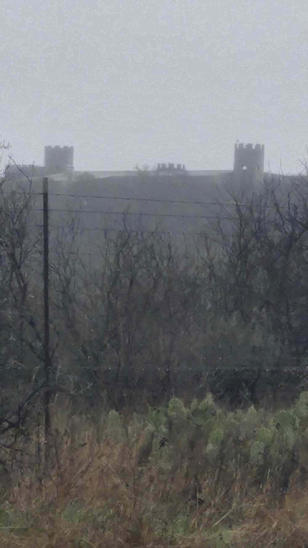
"Castle
on a hill. Not part of the original ghost town but still a pretty
cool sight." - Dustin Martin
March 2016 photo |
The smokestack
in 2001
TE photo |
Thurber
videocassettes and books are available at New York Hill Restaurant
across from the famous smokestack.Dr. Leo Bielinski's informative
site on Thurber is www.thurbertexas.com For more information on Thurber,
see if your library has:
THURBER: The
Life and Death of a Company Coal Town by John Spratt III.
FIRE IN THE
HOLE by Weldon Hardman or
THE BACK ROAD
TO THURBER by Leo S. Bielinski
Our sincere thanks to Mr. Leo Bielinski who reviewed our article
for accuracy and added to our knowledge of this unique place, in
our opinion the most fascinating of all Texas ghost towns.
|
|
|
 HOME
HOME