|
Last Remaining
International Boundary
for
The Republic of Texas
8149 FM 31S
23 Miles SE of Carthage
Texas |
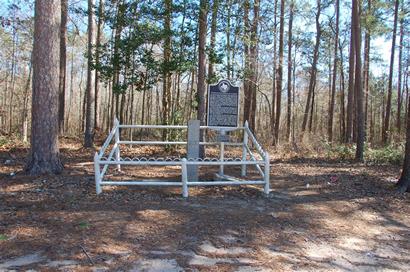
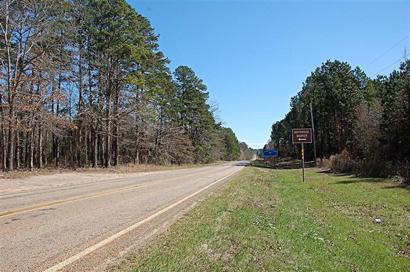
International
Boundary Republic of Texas-United States Marker
Photo
courtesy Gerald
Massey , Feb. 2009
|
Photographer's
Note:
"The marker is located on the Louisiana / Texas
state line on Louisiana Highway 765 and Texas FM-31. This is only
six miles from Logansport, Louisiana while it is ten miles from Deadwood,
Texas.
Only a hundred yards or so from the marker is a sign saying "Galloway."
This was the birthplace of Country Musician Jim
Reeves. I believe that Galloway would technically be the closest
"community" to the marker, although it doesn't appear on the Texas
state map while Deadwood
and Logansport both appear on their respective maps." - Gerald
Massey, February 2009
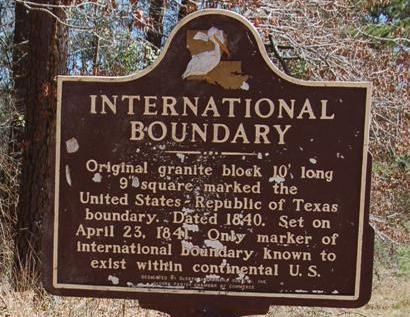
International
Boundary Marker Text |
International
Boundary Marker
Historical Landmark
Photo
courtesy Gerald
Massey , Feb. 2009
|
A
Unique Historical Landmark
by Bob Bowman ("All
Things Historical" Column)
Travelers who take the time to wander down Farm Road 31 between Deadwood,
Texas, and Logansport, Louisiana, will find a one-of-a-kind historical
landmark.
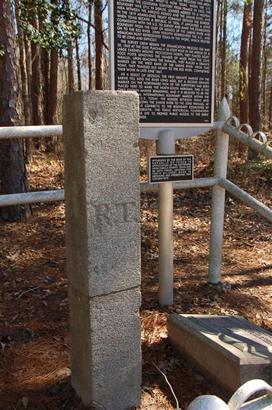
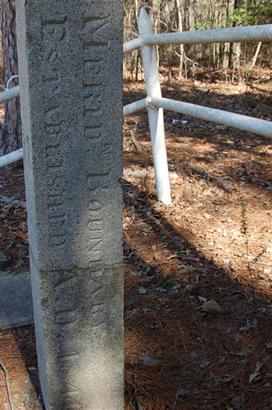
A granite shaft set into the ground on April 23, 1841, marks the only
international boundary existing within the continental United States...
more |
International
Boundary Marker
Historical Landmark
Photo
courtesy Gerald
Massey , Feb. 2009
|
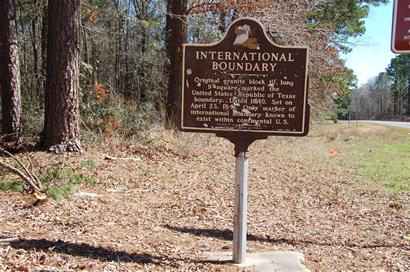
International
Boundary Historical Marker
Photo
courtesy Gerald
Massey , Feb. 2009
|
Historical
Marker: 8149
FM 31S
International
Boundary Marker
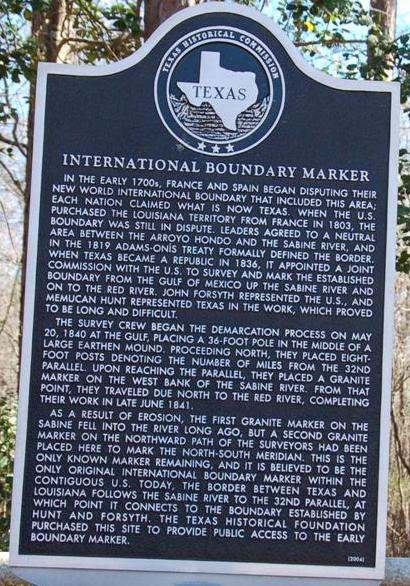
In the early
1700s, France and Spain began disputing their New World international
boundary that included this area; each nation claimed what is now
Texas. When the U.S. purchased the
Louisiana Territory from France in 1803, the boundary was still
in dispute. Leaders agreed to a neutral area between the Arroyo
Hondo and the Sabine
River, and the 1819 Adams-Onís
Treaty formally defined the border. When Texas became a republic
in 1836, it appointed a joint commission with the U.S. to survey
and mark the established boundary from the Gulf of Mexico up the
Sabine
River and on to the Red River. John Forsyth represented the
U.S., and Memucan Hunt represented Texas
in the work, which proved to be long and difficult.
The survey crew began the demarcation process on May 20, 1840 at
the Gulf, placing a 36-foot pole in the middle of a large earthen
mound. Proceeding north, they placed eight-foot posts denoting the
number of miles from the 32nd parallel. Upon reaching the parallel,
they placed a granite marker on the west bank of the Sabine
River. From that point, they traveled due north to the Red River,
completing their work in late June 1841.
As a result of erosion, the first granite marker on the Sabine fell
into the river long ago, but a second granite marker on the northward
path of the surveyors had been placed here to mark the north-south
meridian. This is the only known marker remaining, and it is believed
to be the only original international boundary marker within the
contiguous U.S. Today, the border between Texas
and Louisiana follows the Sabine
River to the 32nd parallel, at which point it connects to the
boundary established by Hunt and Forsyth. The Texas Historical Foundation
purchased this site to provide public access to the early boundary
marker.
2004
[See Birth
of a Republic by Jeffery Robenalt ]
|
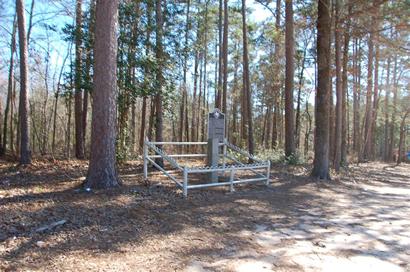 |
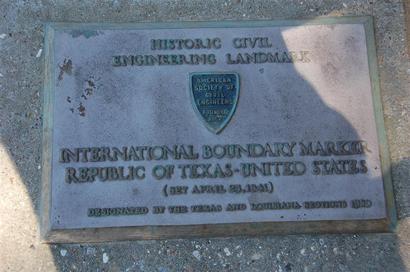
International
Boundary Republic of Texas-United States Marker
Photo
courtesy Gerald
Massey , Feb. 2009
|
International
Boundary Republic of Texas-United States Marker plaque
Photo
courtesy Gerald
Massey , Feb. 2009
|
|
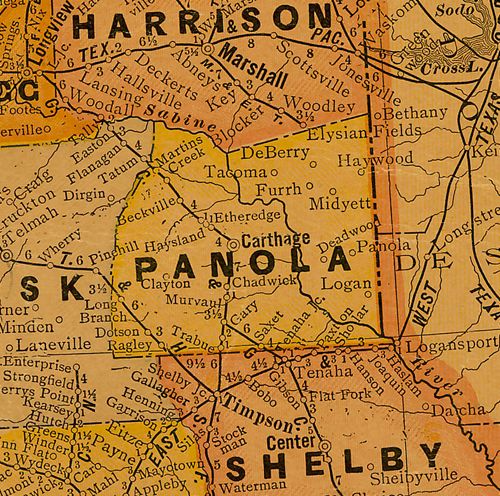
1920s Panola
County map showing
Deadwood, TX
& Logansport, Louisiana
From Texas
state map #10749
Courtesy Texas General Land Office
|
|
|
 HOME
HOME