|
Amarillo
Symphony
by Mike
Cox
Santa Fe Train
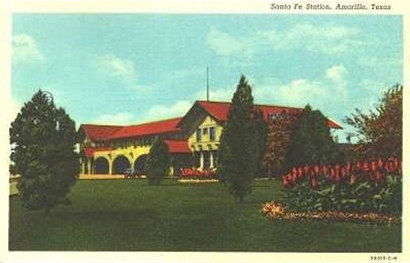
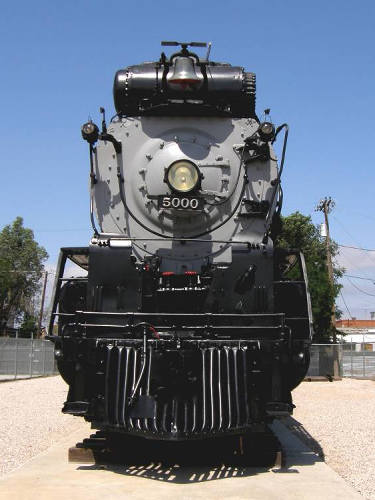
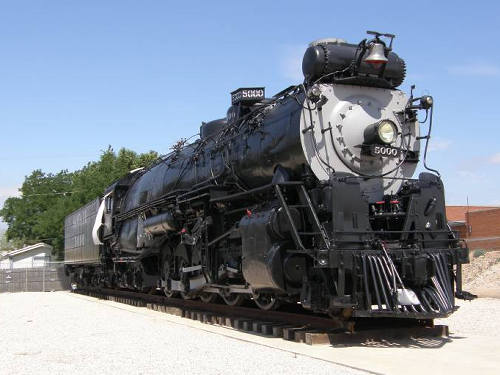
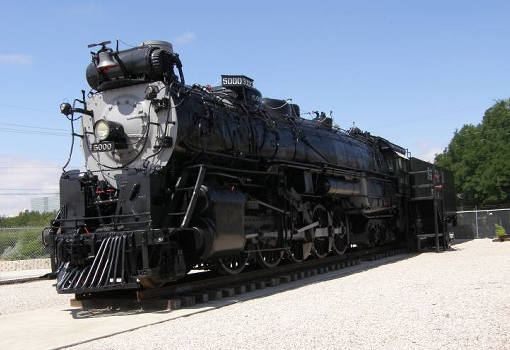
Number One, with a 3751-class 4-8-4 steam engine up front, pulled
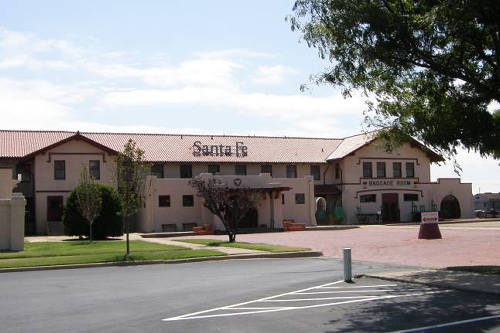
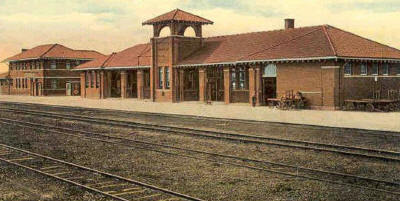
up to the red-roofed, Mission revival-style Amarillo
station on time.
One of the people stepping off the train at the busy depot was William
Gibson, a Santa Fe employee traveling on a company pass.
With his small suitcase in one hand and his well-worn tool and instrument
valise in the other, Gibson walked from the station to the nearby
Capitol Hotel at
Fourth and Pierce. The Herring,
across the street, was a bigger hotel, but Gibson liked the 200-room
Capitol. At the front desk, Gibson went through a familiar routine:
He asked for a south-side room on the fourth floor or higher.
As soon as he closed the door behind him, Gibson walked to the window
and looked out. His room, as he knew it would, looked down on the
busy Santa Fe yard. The roundhouse had 32 train stalls and almost
always was full. In the distance, Gibson saw a plume of black smoke
as a freight train hit an eastbound grade on a big curve. After
taking in the view for a moment, he raised the window a few inches.
It opened easily — wood did not often swell with moisture on the
High Plains. At nearly 3,700 feet above sea level, spring and summer
nights usually are cool and humidity-free.
On this night, the wind blew strong from the southeast, sucking
through the cracked window. Gibson liked the fresh night air, but
he had opened the window more to let in sound.
Number One had boarded its Amarillo
passengers and was moving slowly through the Amarillo
yard. Gibson checked his watch. It was still on time. Her hogger
— railroad talk for engineer — blasted the whistle as the train
headed toward the 24th Street crossing.
One long, two shorts, and then a continuous blast until the engine
cleared the crossing. The shrill sound created by the high-pressure
steam echoed off the concrete grain elevators lining the tracks
and the high rise office buildings along busy Polk Street. The whistle
was music to the railroad man’s ears. With tongue-in-cheek, he called
it the “Amarillo Symphony.”
Periodically through the night, other trains moved in and out of
Amarillo as most of the city slept.
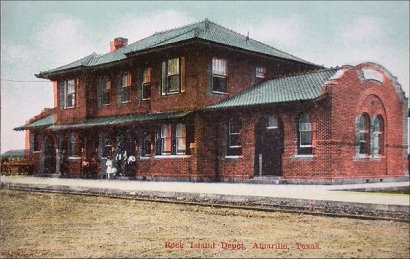
In addition to the Santa Fe track, main lines of the Fort Worth
and Denver and the Rock Island Line intersected at Amarillo.
The piercing notes of train whistles spread across the city and
cut onto the vastness of the plains.
For several generations of Amarilloans, the whistle signals of the
steam engine either comforted them at night like a homemade quilt
or haunted their dreams. For some, the whistles made good company,
dispelling any sense of isolation; others heard the trains and felt
lonesome, remembering or imagining trips taken or not taken. For
all Amarilloans, those whistles — long since replaced by more prosaic
air horns — represent the sound of a city’s history.
Amarillo is the largest city in
Texas owing its existence solely to the
railroad. Houston,
Dallas, San
Antonio, El
Paso, Fort Worth
and Austin all had
other reasons to be, though railroads certainly benefited each.
But Amarillo would not exist, or
if it did it probably would not have amounted to much, had it not
been for the iron.
© Mike
Cox
"Texas
Tales" November
3, 2005 column
|
 HOME
HOME