|
|
One
reason the relatively brief cattle
drive era, which lasted from the end of the Civil War to the early
1880s, had such an impact on history was because the cattle
drives allowed men to rise above the circumstances of their upbringing
and education to make a little money and earn a measure of respect.
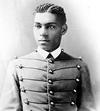
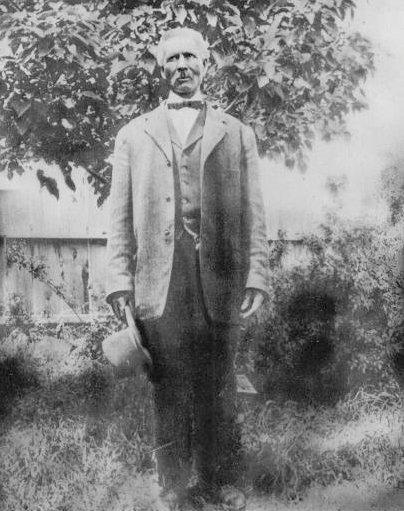
As good an example of that as anybody is Bose Ikard, who was born
into slavery and became rancher Charley
Goodnight’s most trusted and respected cowhand. For Ikard, more
than most, the road to the history books was a long and winding one.
Born into slavery in Mississippi in the 1840s, his father was most
likely his slave master, Dr. Milton Ikard, and his mother was a slave
named King. Along with Ikard’s recognized son, William Susan Ikard,
Bose arrived in Texas with the Ikards in 1852 as a slave. They set
up shop in Parker County
near Weatherford
and began living the life that was being lived on the frontier, which
included breaking horses and battling Comanches. He served with the
Confederacy during the Civil War and returned to Weatherford
to continue as a free man the cowboy life he had lived as a slave.
|
 |
While it’s easy
to say that Ikard’s life changed for the better by his meeting Oliver
Loving and Charles
Goodnight, namesakes of the Goodnight-Loving Trail,
it’s just as easy to say that Loving and Goodnight were the larger
benefactors of the meeting.
“Bose surpassed any man I had in endurance and stamina,” Goodnight
said. “There was a dignity, a cleanliness and reliability about
him that was wonderful. His behavior was very good in a fight and
he was probably the most devoted man to me that I ever knew. I have
trusted him farther than any man. He was my banker, my detective,
and everything else in Colorado, New Mexico and the other wild country.
The nearest and only bank was in Denver, and when we carried money,
I gave it to Bose, for a thief would never think of robbing him.”
The Goodnight-Loving Trail was different from the Chisholm and other
famous trails of the cattle drive era in that it headed west out of
Texas instead of north. By going due west through Fort
Phantom Hill, Goodnight and Loving reasoned that they could avoid
the perils that lurked in Indian Territory, now Oklahoma. Between
them, Goodnight and Loving had 2,000 head of Texas
longhorn on the first drive. Stretches of the trail, especially
in the deserts of southwest Texas both east and west of the Pecos
River, might have made some of the men wonder if they wouldn’t
have been better off taking their chances with the Comanches.
Ikard distinguished himself on the trail with an unerring devotion
to duty and skills that made him a key member of the outfit. His ability
to trail stampeding cattle at night was especially valued and respected
because it was as dangerous as it was essential. “He was the most
skillful and trustworthy man that I had,” Goodnight later said of
Ikard.
Loving was killed by Comanches in September of 1867 in New Mexico.
In February of the following year, Loving’s body was exhumed from
its grave in Fort Sumter and hauled 700 miles back to Weatherford.
Bose Ikard probably was one of the men who accompanied Goodnight on
that epic journey, which was so eloquently dramatized in “Lonesome
Dove.” Ikard served as the model for the Joshua Deets character
in the miniseries based on the book. In McMurty’s fictional version,
Ikard dies on the trail.
In real life, in between trips up the trail, Ikard bought a farm near
Weatherford,
married and fathered a half dozen children. Neighbors remembered him
as a handyman who did yard work and ran errands. When he died of the
flu in 1929, the Weatherford
paper ran a short obituary referring to him as “one of the old time
Negroes of Parker County.”
When Goodnight, then in his 90s and the embodiment of a living legend,
heard of his old friend’s death he made arrangements to have a monument
erected at his gravesite. A more proper obituary, one that included
his years as a cowboy with Goodnight and Loving, was published.
On Ikard’s monument, Goodnight had these words inscribed: “Served
with me four years on the Goodnight-Loving Trail, never shirked duty
or disobeyed an order, rode with me in many stampedes, participated
in three engagements with Comanches, splendid behavior.”
© Clay Coppedge
"Letters from Central Texas"
February 1, 2011 Column |
|
|
 HOME
HOME