|
 |
History in
a Pecan Shell
Back in the 1870s
there had been a Texas Ranger camp two miles northeast of present-day
Ranger along Palo Pinto Creek. The Ranger visits gave it the place
it's initial name of Ranger Camp Valley. It did indeed have
the appearance of a camp since all businesses, including schools,
churches and stores were inside tents.
When the Texas and Pacific Railroad entered the valley in 1880, 160
acres were donated to the railroad and the community moved to establish
the permanent town of Ranger. In the last few days of 1880, the town's
new post office opened. Growth was slow but assured. By the end of
the 1880s Ranger had 350 people which grew to 750 by 1904.
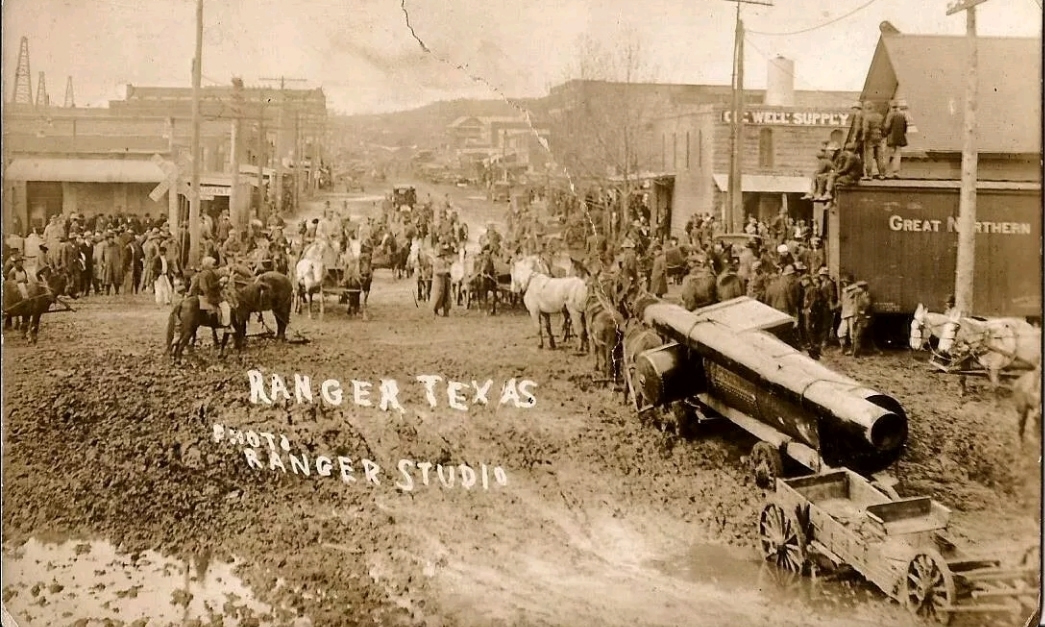
The region suffered a drought in 1917 - just about the time the area's
first oil well came in. With daily production measured at 1,700 barrels,
this produced one of the largest (and some say the most archetypical)
oil boom in Texas. The Texas Pacific
Coal and Oil Company had 22 wells either in production or being drilled
in 1919. No fewer than eight refineries were under construction or
refining and with $5 million in deposits, banking was good in Ranger.
The 1920 Census figures have given the population of Ranger as 16,201,
but the tent cities and transient population made an acurate count
impossible. Some estimates go as high as 30,000. Ranger received a
second railroad with the arrival of the Wichita Falls and Southern
and soon five trains a day were stopping at the boom town.
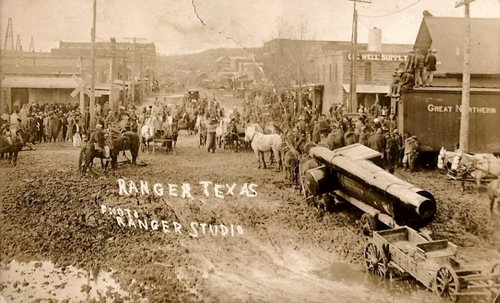
Every silver-lining has its dark cloud and when the drought broke
Ranger's dirt streets turned into a morass. Unsanitary conditions
caused an outbreak of typhoid fever. An April fire in 1919, destroyed
two downtown blocks. Naturally, the parasites descended on Ranger
and violence, gambling and prostitution sprang up like the proverbial
mushrooms.
The boom was short lived and while some in 1921 were hoping for new
oil discoveries, a string of bank failures dashed all hopes. The 1930
population of Ranger (which was much easier to count than the 1920
census) was down to just 6,208.
After the bust, unrest and discontentment provided a strong base for
the Ku Klux Klan. By 1980 Ranger had a population of 3,142 which has
since declined to just under 2,500. |
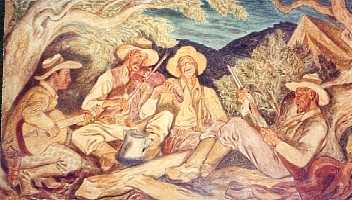 |
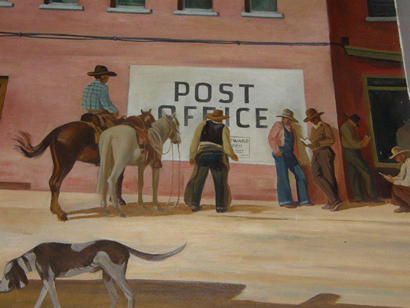
Hamilton
post office mural depicts Texas rangers
TE photo |
Ranger, Texas
Landmarks
Photo
Gallery |
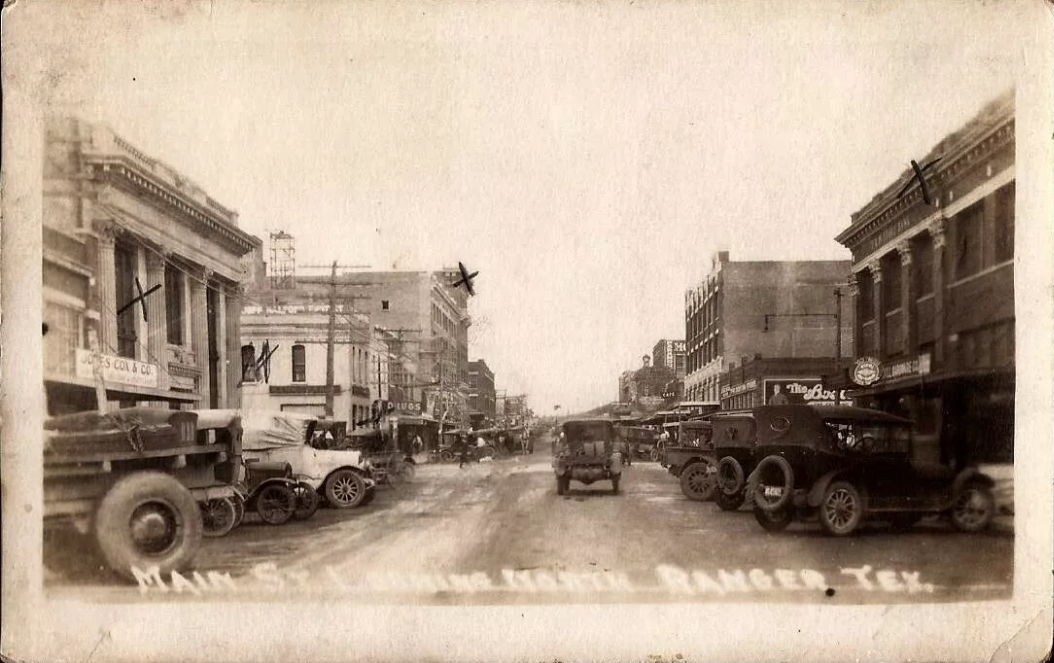
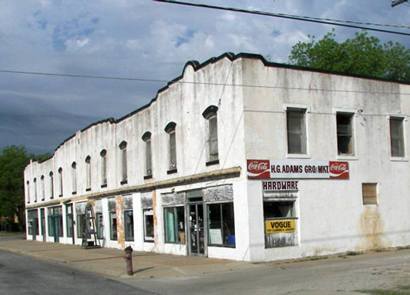
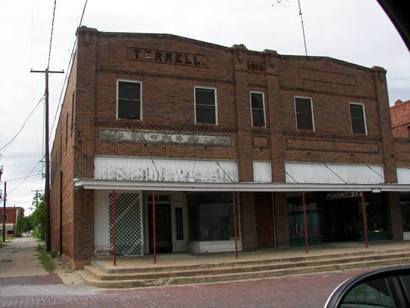
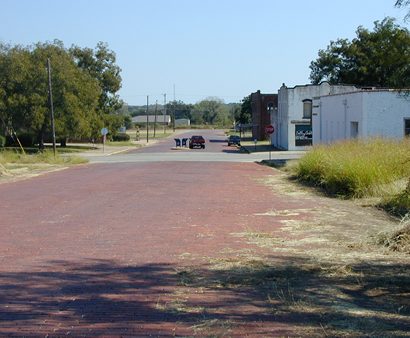
Brick street
view common in town.
Photo courtesy Mike
Price, 2007 |
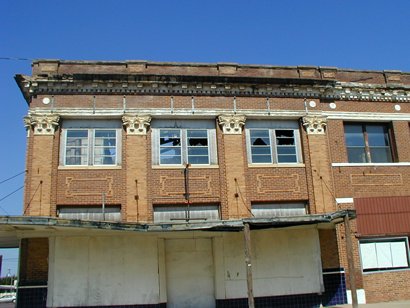
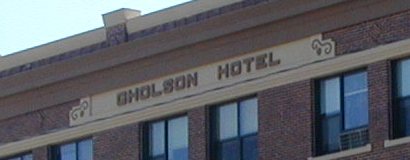
Ranger's
Gholson Hotel by Don Champion
Excerpted from the book Wood Derricks, Iron Men and Gold Women
"The Gholson was the scene of many oil deals taking place during
the oil boom, and scores of the famous and the infamous were found
around the hotel lobby..." Read
full Article
[See Rooms
with a Past › ] |
The Theatre
in Ranger
"I was delighted
to see the photos of Ranger in the October issue of TE. I wanted to
share with you some information about the picture of the old theater.
It was originally called the Lone Star and later became the
Columbia. Its speciality was the Western.
The old movie house has sat empty for years, but I understand that
the local historical society has cleaned the inside up and has accumulated
seats for the building in the future hope of making it a workable
theater again. The roof is missing and that is the financial imperative
for full restoration. Who knows? Maybe someday there will be a theater
again in Ranger. - Billy
Smith, October 21, 2007 |
Ranger, Texas
Forum
Subject: Depot/Museum
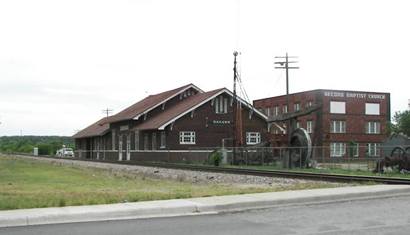
My mother and father, Ann and B.H. Peacock contributed much to the
conversion of the train depot to a museum. - Bob Peacock, November
02, 2015 |
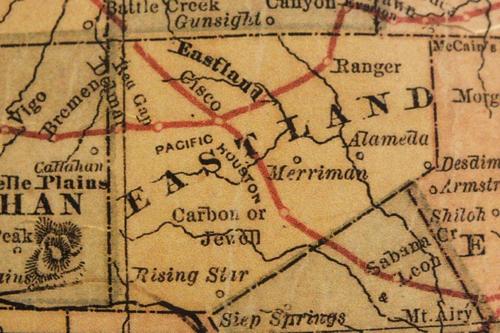
Eastland
County 1882 map showing Ranger
From Texas state map #2134
Courtesy
Texas General Land Office |
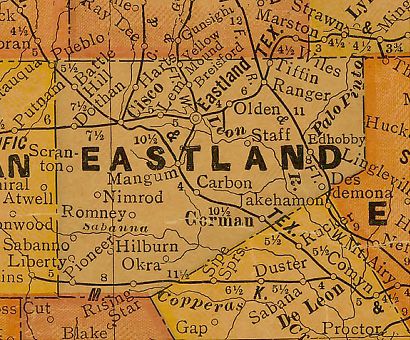
Eastland
County 1920s map showing Ranger
NE of Eastland
From Texas state map #10749
Courtesy
Texas General Land Office |
| Texas
Escapes, in its purpose to preserve historic, endangered and vanishing
Texas, asks that anyone wishing to share their local history, stories,
landmarks and recent or vintage photos, please contact
us. |
|
|
 HOME
HOME