|
WESLACO, TEXAS
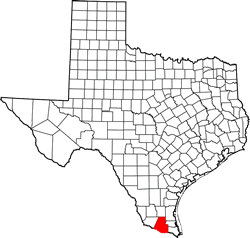
Hidalgo
County, South Texas
26°9'33"N 97°59'15"W (26.159130, -97.987374)
State Hwy 83 & FM 88
W of Mercedes
E of Donna
18 miles S of Edinburg
the county seat
16 miles E of McAllen
19 miles W of Harlingen
5 miles N of Progreso
7 miles N of the bridge over the Rio Grande to Nuevo Progreso, Mexico
Population: 41,629 Est. (2019)
35,670 (2010) 26,935 (2000)
Home to an estimated 6,000 Winter Texans
|
 |
|
History
in a Pecan Shell
The Spanish Land Grant refers to the area as Llano Grande
and date back to 1747. Over the years the huge tract was broken
down into smaller parcels.
In 1904, Lon C. Hill, founder of Harlingen
and Uriah Lott, brought the railroad through the underpopulated
area which was primarily ranchland at this time.
Camp Llano Grande was set up as part of a huge military buildup
by the Army to secure the U.S. Border during the turmoil in Mexico
and occasional forays into Texas by Mexican banditti. The camp provided
training for troops that would later be sent to France in WWI.
W. E. Stewart was a land developer from Kansas City who named the
town after his W.E. Stewart Land Co. The first lots of Stewart's
30,000 acres went up for sale on December 10th 1919, but nobody
felt like pouring foundations over the holidays, so 1920 was the
year things really got started.
The post-war optimism brought an influx of eager pioneers. Weslaco
had been relying on its neighbors of Mercedes
and Donna for
mail delivery and electricity until they got their own power plant
and post office.
1920 also gave Weslaco a posting of Texas Rangers. 1924 brought
a fire, while 1927 brought a permanent depot. In 1928 the beautifully
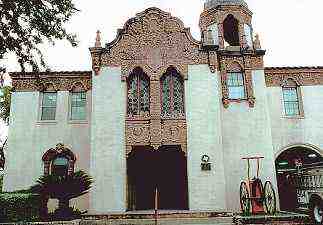
detailed City Hall was built and the Cortez
Hotel opened its doors on the last day of the year with a New
Year's Eve Ball.
|
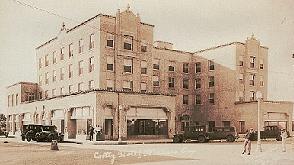 |
The Cortez
Hotel (Villa de Cortez Today)
Photo courtesy Weslaco Museum |
It was a decade of accomplishments and by 1929 they had a lot to show
for their 10th anniversary.
During prohibition there was a lot of traffic on the bridge
to go have a legal drink in Mexico and watch the dog races. Al Capone
was said to have spent some time here looking after his interests
(which had nothing to do with citrus).
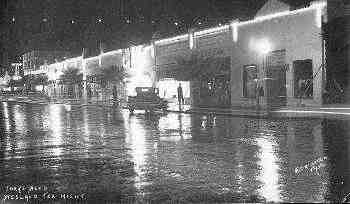
The people of Weslaco came up with an idea to brighten the gloom of
the Great Depression in 1936 by lighting two blocks of Texas
Boulevard downtown with neon. |
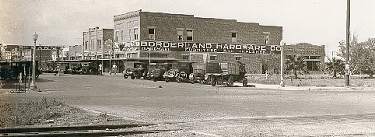
Before
"Main Street Cities" there was Texas Avenue.
From the historic photograph collection of Weslaco Museum |
Street Scene,
Weslaco, Texas 1926
Photo courtesy of Weslaco Museum |
| From
the historic photograph collection of Weslaco Museum |
Weslaco suffered the natural calamities of flood and hurricane,
fire and freeze.
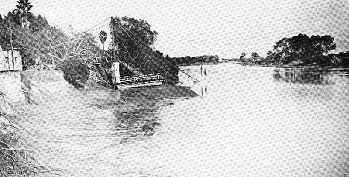
In 1933, forty people were killed in what Floridians refer to as The
Labor Day Hurricane and the suspension bridge at Hidalgo
fell into the Rio Grande. The bridge
at the Mercedes-Rio Rico crossing collapsed in 1941.
A severe freeze in 1951 killed an estimated 12 million grapefruit
trees. |
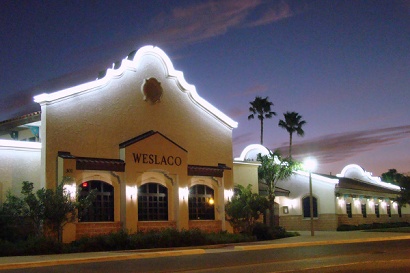
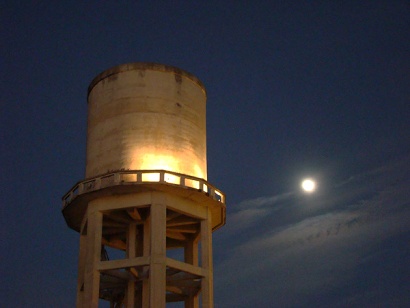
Weslaco Night
Scene
Photo courtesy Ken
Rudine, November 2010 |
Weslaco, Texas
Area Attractions
|
The
Harlon Block Memorial: 1100 Vo-Tech Drive (The Texas National
Guard Armory) Monument to a local youth who became one of the Marines
who raised the flag at Iwo Jima.
The Weslaco
Museum: 515 Kansas Avenue
Valley
Nature Center: 301 S. Border at Gibson Park.
Hours: Tuesday through Saturday 9 to 1
Nature trail and exhibit hall of local flora including a lily pond
and cactus garden. 956-969-2475
Weslaco
Hotels › Book Here
|
Weslaco, Texas
Features & Vintage Photos
|
Weslaco City
Hall / Fire Department / Jail 1928
R. Newell Waters - Architect
Photo courtesy Weslaco Museum |
Street
Name Trivia by Joe Foster
A set of avenues in Weslaco were named for mostly NORTHERN states
on the north or both sides of town, and a few southern states on the
southern side. They run north to south, with a few other Texas nationalistic
terms thrown in:
BORDER, Colorado, REPUBLIC STREET/CALLE DE LA REPUBLICA, Oklahoma,
Ohio, Georgia, Louisiana, Indiana, Nebraska, Missouri, TEXAS BOULEVARD,
Kansas, Illinois, Iowa, Tennessee, Florida (next to ORANGE Ave.),
Michigan, Oregon, Utah, and Nevada. more |
Weslaco Tourist
Information
Weslaco Chamber
of Commerce: 1710 E. Pike Blvd. 956-968-2102
Website: www.weslaco.com
Rio Grande
Valley Tourist Information Center: US HWY 83 & FM 1015 Mon through
Fri 8:30 to 5.
|
Weslaco's
unique story has a book of its own.
Authors:
Karen Gerhardt and Blanca E. Tamez
Order here > |
|
©
John Troesser
First
published December, 2000
Photos provided by Weslaco Museum and Hidalgo County Historical Museum.
|
| Texas
Escapes, in its purpose to preserve historic, endangered and vanishing
Texas, asks that anyone wishing to share their local history, stories,
landmarks and vintage/historic photos, please contact
us. |
|
|
 HOME
HOME