|
Friona, TX -
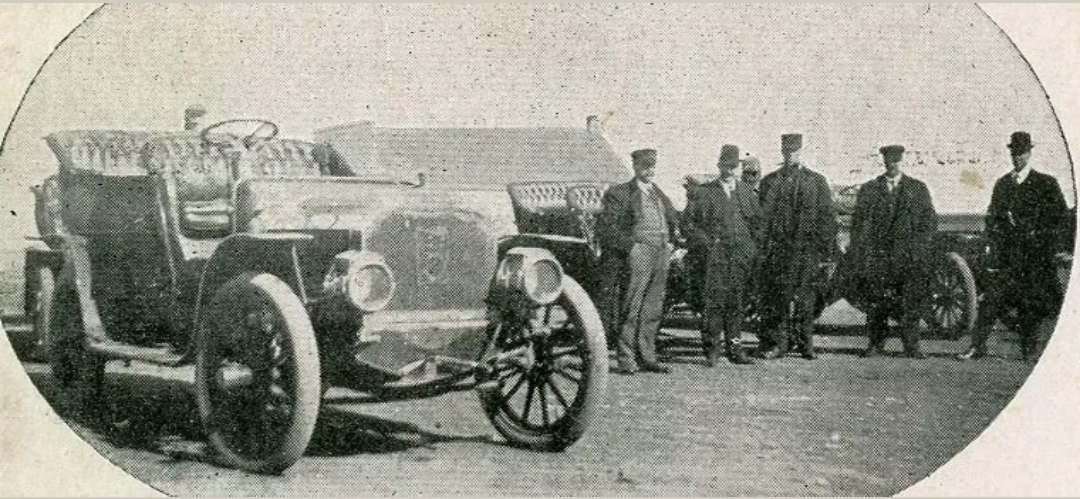
A Party Of Visitors - postmarked 1908
Click on image to enlarge
Postcard courtesy Dan
Whatley Collection |
History in
a Pecan Shell
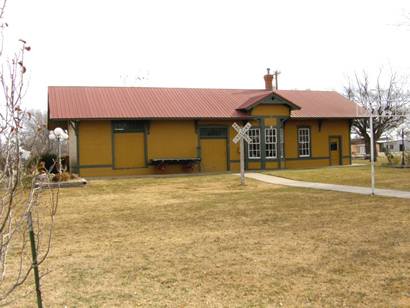
Friona began in 1898 as just plain Frio, Texas,
a shipping point on the Pecos Valley and Northern Texas Railroad.
There are two versions to the origin of the name. The most likely
being that it’s named after nearby Frio Draw. The less likely (but
more popular) explanation is that residents named it for the cold
(Frio) weather.
In 1906 the XIT
Ranch was selling off some of its holdings and the site was surveyed
for subdivion into farms. In 1907 when a post office opened the name
was altered to the present form. Excursion trains brought in prospective
buyers and many families stayed.
In 1908 Friona had a church, school, bank, hotel and even a photographer.
The town lived up to the name of Frio with one blizzard in the winter
of 1910-11 and another in 1918-19. By 1915 the population was up to
200 but the second blizzard as well as severe droughts discouraged
further growth.
In the early 1920s new farming methods sparked a renewed land-sale.
New people moved in and the town had a cotton gin by 1927. The following
year a water plant was established as well as a fire department.
From a population of 731 in 1930, Friona grew to over 2,000 by 1960.
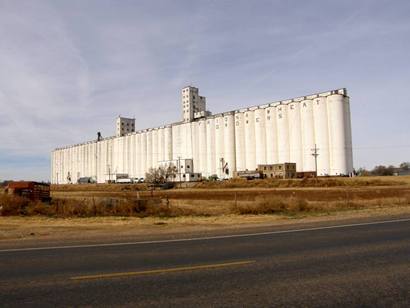
The Friona Wheat Growers Association has storage space for over three
million bushels of wheat. In 1980, Friona became the largest town
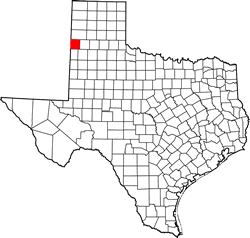
in Parmer County.
In 1990 the population was 3,688, growing to the current (2010) level
of 4,123.
Friona Historical Marker |
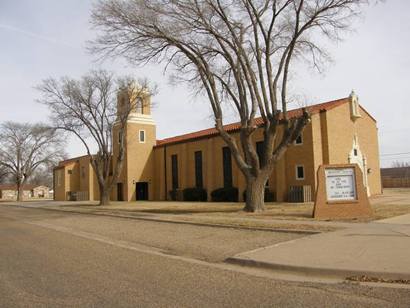
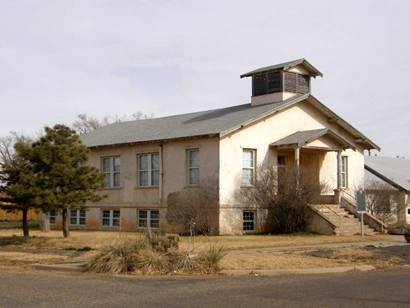
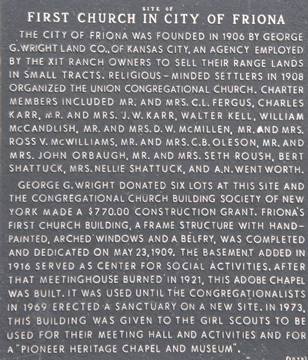
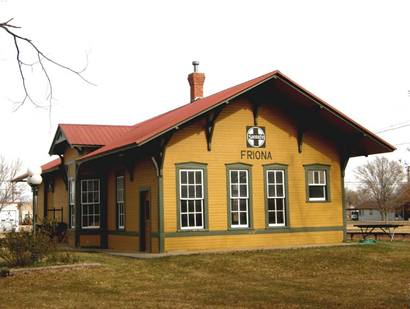
Friona Attractions
& Landmarks
|
 |
 |
 |
 |
 |
 |
 |
 |
 |
 |
 |
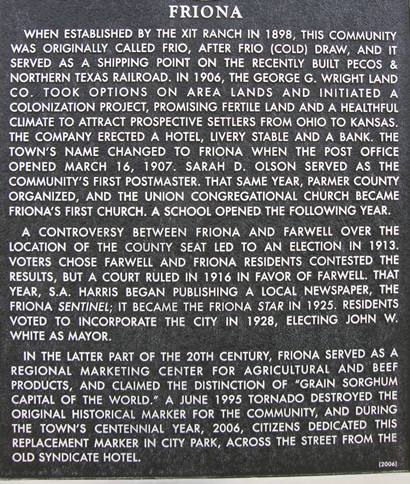 |
Historical Marker
Friona
When established
by the XIT
Ranch in 1898, this community was originally called Frio, after
Frio (Cold) Draw, and it served as a shipping point on the recently
built Pecos & Northern Railroad. In 1906, the George G. Wright Land
Co. took options on area lands and initiated a colonization project,
promising fertile land and a healthful climate to attract prospective
settlers from Ohio to Kansas. The company erected a hotel, livery
stable and a bank. The town's name changed to Friona when the post
office opened March 16, 1907. Sarah D. Olson served as the community's
first postmaster. That same year, Parmer County organized, and the
Union Congregational Church became Friona's first church. A school
opened the following year.
A controversy between Friona and Farwell
over the location of the county seat led to an election in 1913. Voters
chose Farwell and Friona
residents contested the results, but a court ruled in 1916 in favor
of Farwell. That year,
S.A. Harris began publishing a local newspaper, the Friona Sentinel;
it became the Friona Star in 1925. Residents voted to incorporate
the city in 1928, electing John W. White as mayor.
In the latter part of the 20th century, Friona served as a regional
marketing center for agricultural and beef products, and claimed the
distinction of "Grain Sorghum Capital of the World." A June
1995 tornado destroyed the original historical marker for the community,
and during the town's centennial year, 2006, citizens dedicated this
replacement marker in City Park, across the street from the old Syndicate
Hotel.
(2006) |
Historical Marker
- On 8th and Euclid
Friona Schools
Friona has the
distinction of being the first town in Texas to integrate its schools.
The first school opened on this site in 1908 in a one-room frame building,
with Roxie Witherspoon teaching 18 pupils. A two-story brick school
finished in 1911 burned after being struck by lightning in 1922. A
new two-story brick high school opened in 1924. Attendance grew in
the 1940s, when rural schools at Lakeview, Messenger, Black
and Rhea consolidated with Friona. The school achieved its greatest
fame in 1954. Racial segregation of schoolchildren was considered
legal in the 20th century, reaffirmed by the U.S. Supreme Court in
1896 in the case of Plessy v. Ferguson. On May 17, 1954, the court
overturned the decision, declaring segregation unconsitutional in
Brown v. Board of Education. Chief Justice Earl Warren wrote, "we
conclude that, in the field of public education, the doctrine of 'separate
but equal' has no place." Federal and state government moved slowly
to implement change, but in Friona, progress would not wait. The Robert
Walker, Jr. family came to town in September 1954. When Superintendent
Dalton Caffey chose to enroll Walker's three African American sons
in Friona's only school, he quietly achieved the first integrated
public school in Texas. Caffey then informed the school board of his
decision, and things generally went smoothly for the school and new
students. The Walkers moved away during the school year, and in the
spring of 1955 three more African American students attended school
here. Since that watershed year, Friona schools have continued to
uphold Caffey's wish for equal educational opportunity.
(2006) |
Historical Marker
- On 9th and Pierce St.
Friona Women's
Clubs
By 1898, Friona
and several other area townsites had been laid out as switches on
the Pecos Valley & Northern Texas Railroad. Settlers soon began arriving
in Friona, which incorporated in 1906. Twenty Friona women organized
a club in September 1909, meeting in various places for many years
while raising money for a meeting house constructed here in 1941.
The group, which became part of the Texas Federation of Women's Clubs
in 1922, generated three other clubs. Each group performed a variety
of services, including tree planting, medical aid and founding of
the Friona Public Library. The clubhouse has served as a meeting place
for the Women's Clubs, as well as for the larger community.
(2005) |
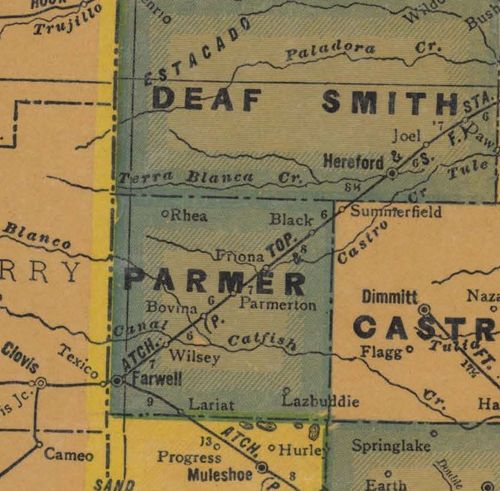
1940s Parmer
County map showing Friona NE of Farwell
From Texas state map #4335
Courtesy
Texas General Land Office |
| Texas
Escapes, in its purpose to preserve historic, endangered and vanishing
Texas, asks that anyone wishing to share their local history, stories,
landmarks and recent or vintage photos, please contact
us. |
| Friona,
Texas - Texas Escapes' 2000th Town. February 2, 2009 |
|
|
 HOME
HOME