|
BOVINA, TEXAS
AKA Bull Town, Texas
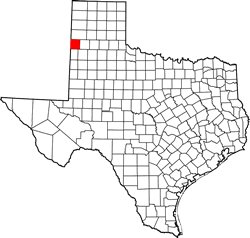
Parmer
County,
Texas Panhandle
34° 30' 49" N, 102° 52' 59" W (34.513611, -102.883056)
US 60
11 miles NE of Farwell
the county seat
36 miles SW of Hereford
82 miles SW of Amarillo
98 miles NW of Lubbock
18 miles NE of Clovis, New Mexico
Population: 1,777 Est. (2019)
1,868 (2010) 1874 (2000) 1,549 (1990)
Bovina, Texas Area Hotels › Hereford
Hotels |
 |
History in
a Pecan Shell
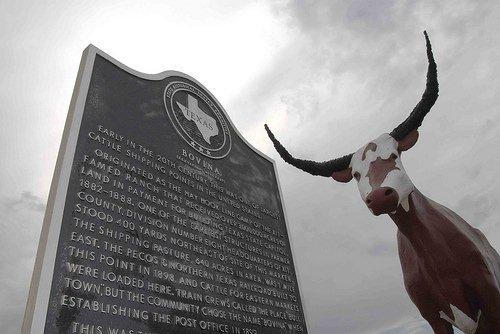
Bovina's history
is encapsulated in the Historical Marker erected in 1968 on US 60
next to large bull sculpture.
Marker Text:
Early in the 20th century, this was one of largest cattle shipping
points in the United States.
Originated as the Hay Hook Line Camp of the XIT
-- famed ranch that received over 3,000 acres of land in payment
for building Texas State Capitol, 1882-1888. One of the earliest structures
in Parmer County,
division number eight headquarters of XIT,
stood 400 yards northeast of site of this marker. The shipping pasture,
640 acres in area, was 1 mile east. The Pecos & Northern Texas Railroad
built to this point in 1898, and cattle for eastern markets were loaded
here. Train crews called the place "Bull Town", but the community
chose the name "Bovina" when establishing the post office in 1899.
This was the first post office in Parmer
County, created 1876, named for Martin Parmer (1778-1850), patriot
and signer of Texas Declaration of Independence. Although known to
explorers early as 18th century, county had few inhabitants before
1907, when it was organized, with Bovina one of its leading towns.
By 1915, Bovina had 200 people, 2 churches, a bank, a school, and
a hotel for prospective settlers. It is now market and supply center
for rich area of irrigated farms, and still produces fine cattle.
(1968) |
 |
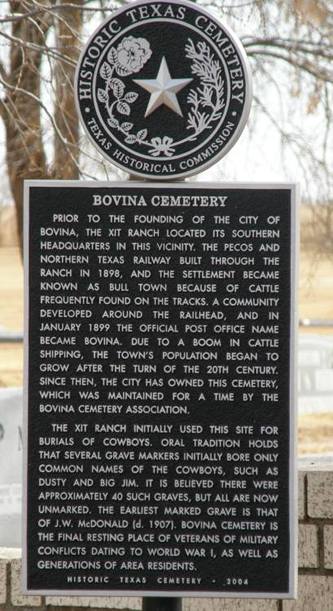
Historical Marker:
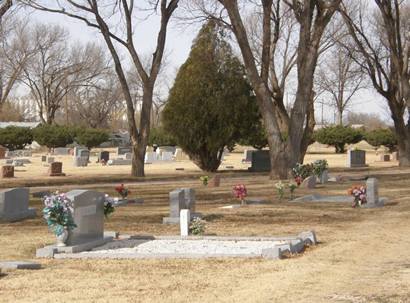
Bovina Cemetery
Prior to the founding
of the city of Bovina, the XIT
Ranch located its southern headquarters in this vicinity. The
Pecos and Northern Texas Railway built through the ranch in 1898,
and the settlement became known as Bull Town because of cattle frequently
found on the tracks. A community developed around the railhead, and
in January 1899 the official post office name became Bovina. Due to
a boom in cattle shipping, the town's population began to grow after
the turn of the 20th century. Since then, the city has owned this
cemetery, which was maintained for a time by the Bovina Cemetery Association.
The XIT
Ranch initially used this site for burials of cowboys. Oral tradition
holds that several gravemarkers initially bore only common names of
the cowboys, such as Dusty and Big Jim. It is believed there were
approximately 40 such graves, but all are now unmarked. The earliest
marked grave is that of J.W. McDonald (d. 1907). Bovina Cemetery is
the final resting place of veterans of military conflicts dating to
World War I, as well
as generations of area residents.
Historic Texas Cemetery - 2004 |
 |
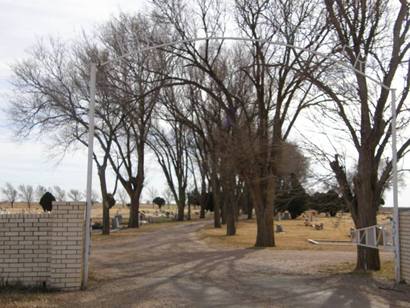
Bovina Cemetery
Historical Marker
Photo courtesy Barclay
Gibson, December 2008 |
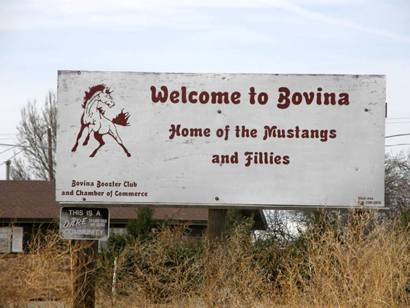
Welcome to Bovina
- Home of the Mustangs and Fillies
Photos
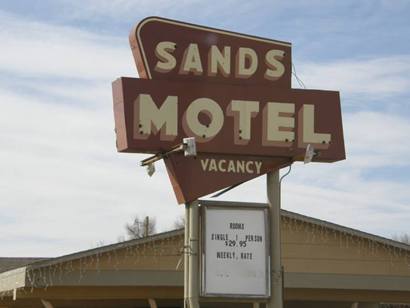
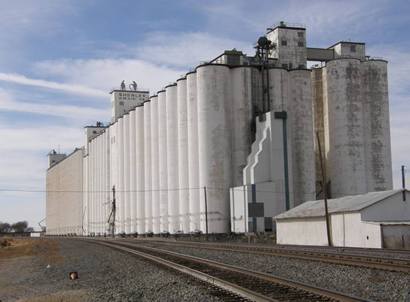
courtesy Barclay
Gibson, December 2008 |
Related
Article
Bull Town
Cartoon by Roger T. Moore |
| Texas
Escapes, in its purpose to preserve historic, endangered and vanishing
Texas, asks that anyone wishing to share their local history, stories,
landmarks and recent or vintage photos, please contact
us. |
|
|
 HOME
HOME