|
|
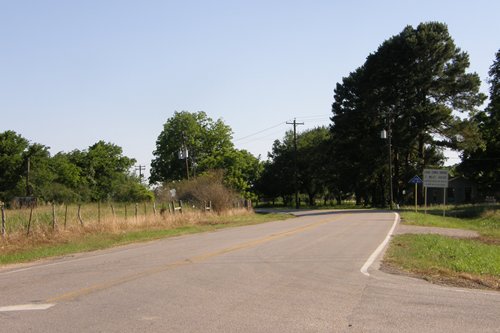
Hockley's road
less traveled
TE photo, 2007 |
History in
a Pecan Shell
Sam McCurley is
credited with being the first settler here – some seven years before
the Texas Revolution. Not much is known about Mr. McCurley, since
it was George Washington Hockley
(see below) who established the
town just prior to hostilities. The Texas Army camped here in April
of 1836.
The railroad (the Houston and Texas Central) arrived in the Spring
of 1857 and the following year a post office was opened under the
name of Houseville. This oversight was soon corrected and the name
changed to the founder, who had died just four years previously. After
the Civil War it was suggested that Hockley become the county seat
of a county with the same name, but the idea didn’t have enough support.
BY 1890 the population was nearly 300. Six years later the town was
thriving with a cooton gin, three stores and four saloons. In the
1920s the population decreased to around 200 – remaining there through
the 1940s. After WWII
the population rose to 300 – remaining there through the 2000 Census.
Although the Handbook of Texas lists 95 businesses in Hockley, a visit
to the densely-shaded community will show little evidence of such
an economy. |
Hockley: The
Man
George Washington
Hockley, was born in Philadelphia in 1802. As a War Department clerk
in Washington D.C. he met (the future) Governor of Tennessee Sam
Houston who suggested that he relocate there. Hockley and Houston
became friends and when Houston came to Texas
in 1835, he made Hockley his chief of staff when he became commander-in-chief.
Hockley was in charge of the lengendary “Twin
Sisters” at the
battle of San Jacinto.
Houston appointed Hockley to several other posts, including secretary
of war (prior to statehood). Hockley also traveled to Mexico
as an emissary of peace in 1843. Hockley did not live in his namesake
town, but chose Galveston.
On a trip to visit Henry L. Kinney in Corpus
Christi, in June of 1854, Hockley died and was buried in Old
Bayview cemetery. The Texas
Centennial Commission Committee erected a marker at his gravesite
in 1936. |
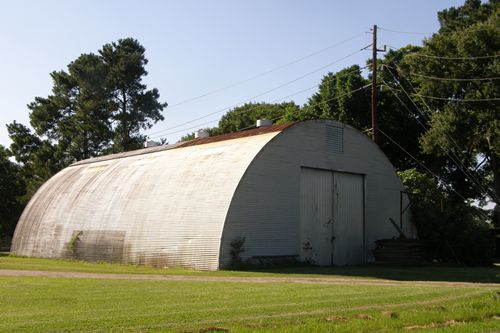
Quonset Hut
TE photo, 2007 |
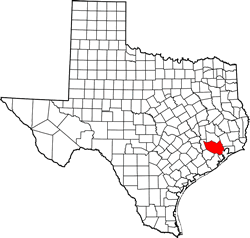
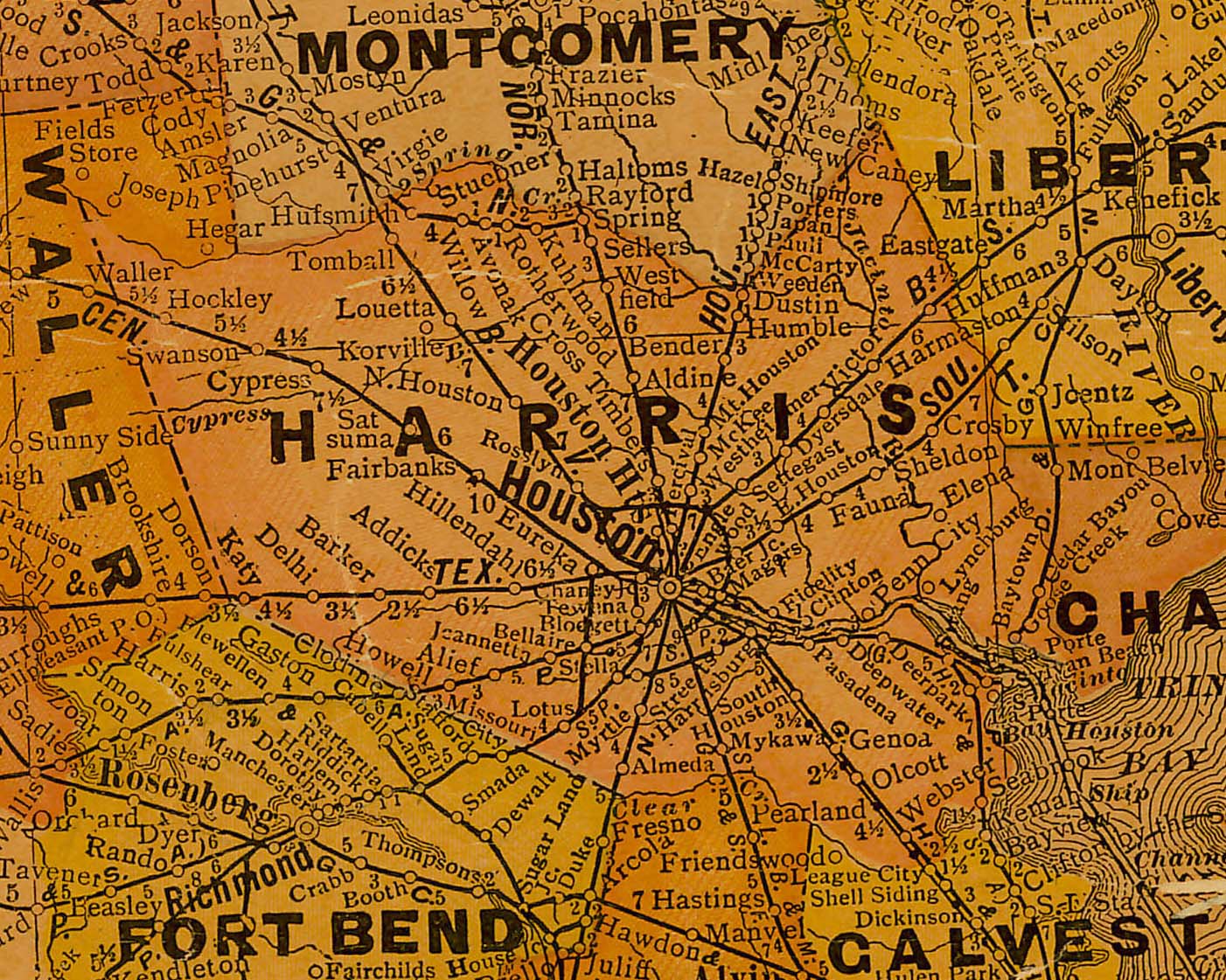
1920s map showing
Hockley, Tomball, Cypress
in NW Harris County
in relation to Houston
the county seat
(Click on image to enlarge)
From Texas state map #10749
Courtesy
Texas General Land Office |
| Texas
Escapes, in its purpose to preserve historic, endangered and vanishing
Texas, asks that anyone wishing to share their local history, stories,
landmarks and recent or vintage/historic photos, please contact
us. |
|
|
 HOME
HOME

 Texas
Gulf Coast
Texas
Gulf Coast East
Texas
East
Texas Central
Texas North
Central
Texas North Central
Texas South
Central
Texas South Texas
Panhandle
Texas
Panhandle South
Texas
South
Texas Texas
Hill Country
Texas
Hill Country West
Texas
West
Texas Texas
Ghost Towns
Texas
Ghost Towns Texas
Counties
Texas
Counties